15 Best Edgar Haircuts for Men: Classic, Taper & Textured Styles
Published: 5 Oct 2026
The Edgar haircut has become a popular choice for men who want a sharp, modern style with a distinctive finish. Its signature straight fringe and clean shape can be adapted with classic cuts, low or high tapers, fades and textured layers to create different looks. Whether you prefer a neat and structured style or a more relaxed edgy finish there is an Edgar variation to suit your personal taste. Explore these 15 best Edgar haircuts for men and find a fresh style that fits your hair type and everyday look.
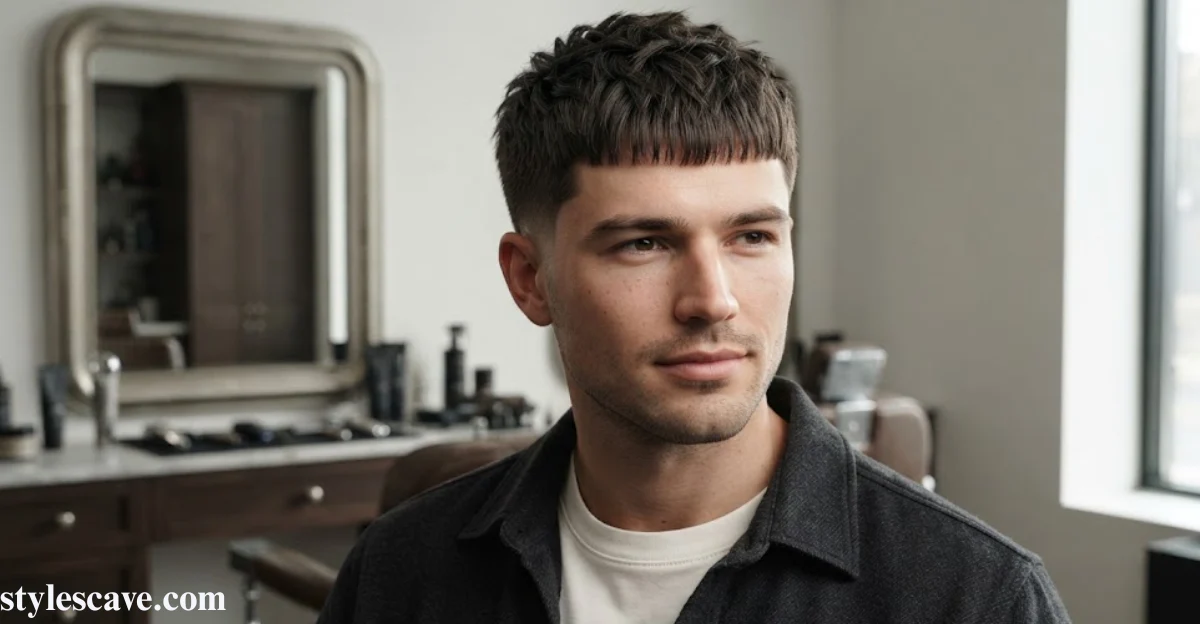
Table of Contents
15 Best Edgar Haircuts for Men
Give your style a fresh upgrade with one of these Edgar haircuts. From clean tapers to textured and modern finishes, choose the look that fits you best and take your favorite style to your barber.
Classic Edgar Haircut
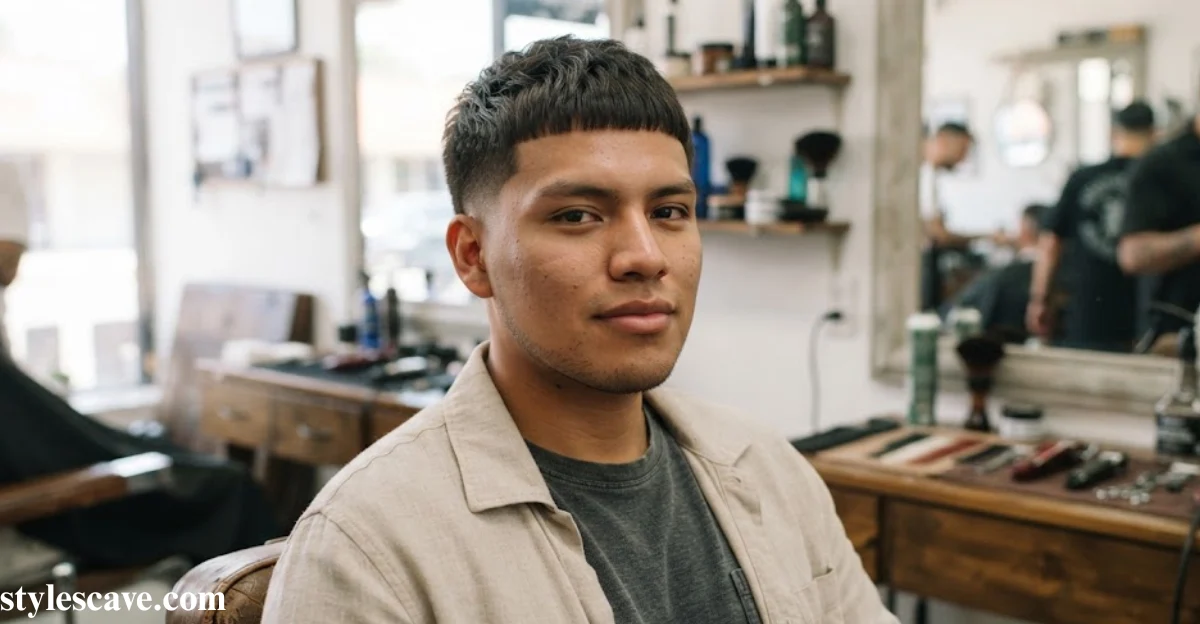
The classic Edgar features a compact textured top with clean faded sides and a sharp straight fringe. Its recognizable Edgar shape comes from the defined fringe and uniform top, creating a structured and modern appearance with a clean finish.
This textured haircut works especially well with straight hair and dense hair because the compact top maintains its shape naturally. A lightly textured top adds movement, while the faded sides and straight fringe keep the Edgar shape sharp, defined, and easy to recognize.
From my experience as a stylist, I find that the classic Edgar looks best when the fringe is shaped carefully around the client’s natural hairline. I like keeping the top compact while adding enough texture to create movement without losing its defined shape.
2. Low Taper Edgar
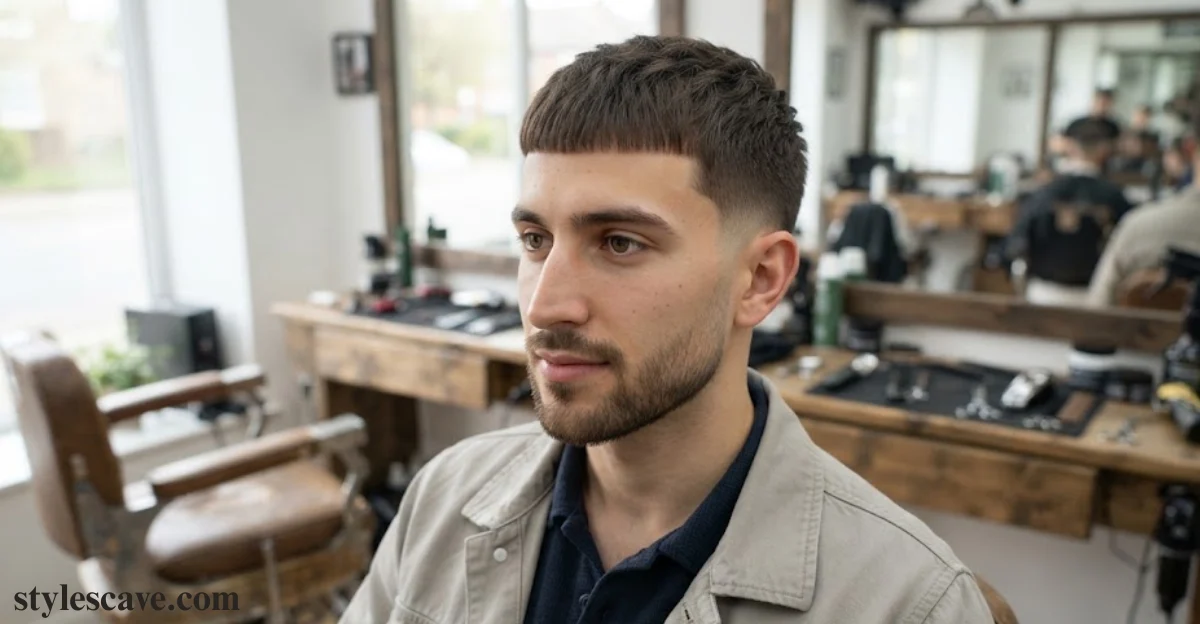
The low taper Edgar keeps the taper close to the ears and gradually works toward the neckline, leaving more fullness through the sides. This creates a less dramatic profile while still keeping the distinctive fringe and recognizable Edgar shape.
With extremely short sides avoided, the gradual taper gives the haircut a softer grow out and more natural appearance. The neckline taper and ear taper provide subtle side work, making this a low-maintenance haircut with controlled sides and a softer profile.
From my experience, I recommend a low taper when someone wants the Edgar fringe without an overly dramatic fade. I find that keeping the natural sides slightly fuller makes the haircut easier to maintain while allowing the fringe to remain the main feature.
3. Mid Taper Edgar
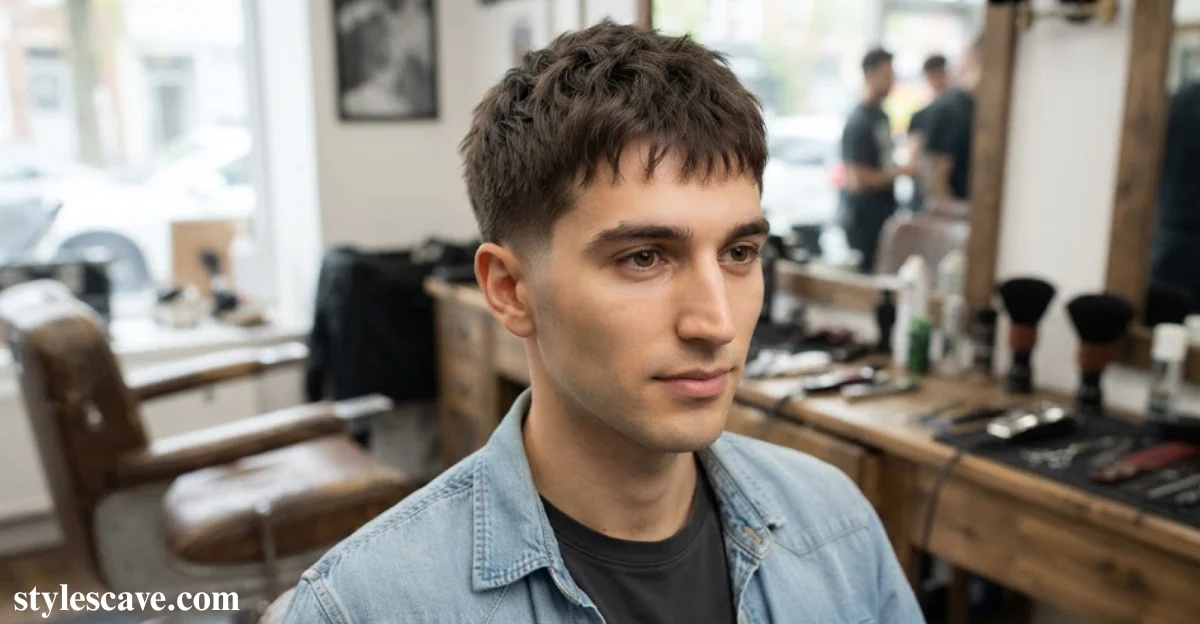
The mid taper Edgar places the taper higher on the sides, creating more visible contrast while keeping the overall haircut balanced. It gives the modern Edgar a stronger fade without completely removing the natural sides, keeping the front focus on the defined fringe.
The taper height creates a medium taper that works well for a versatile haircut with a clean silhouette. Keeping relatively natural sides alongside a defined fringe helps maintain balanced proportions, while a skin-tight fade can make the Edgar shape more noticeable.
In my experience, a mid taper is a great choice for clients who want more side contrast than a low taper but still prefer some natural side profile. I usually focus on balancing the taper height with the fringe so the haircut looks modern without becoming too aggressive.
4. Edgar With High Fade
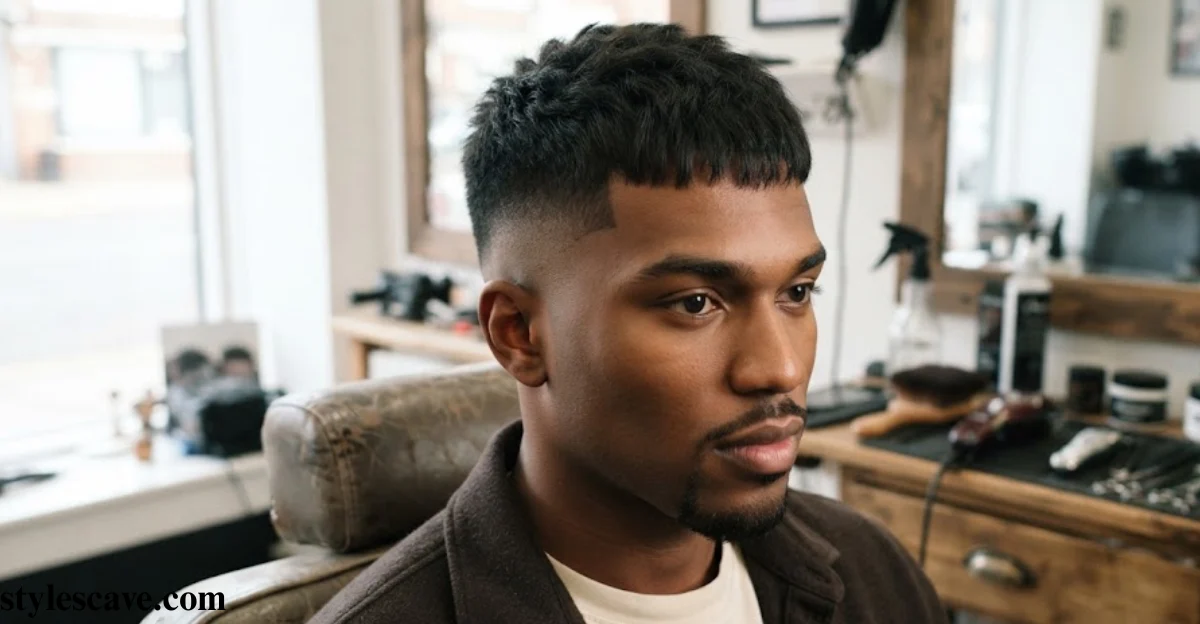
A high-fade Edgar creates strong contrast by taking the shortest section higher up the sides. The textured top and sharp fringe become more prominent, giving the haircut a bolder appearance and making the defined front edge an important part of the overall style.
Fade height plays a major role in the haircut proportions because higher sides create stronger side contrast. The high fade, top texture, and defined front work together to create a bold haircut with a modern Edgar shape that stands out among different types of fade haircuts.
From my experience, I use a high fade when a client wants the Edgar to have a noticeably bold silhouette. I pay close attention to fade placement and side proportions because the higher the fade sits, the more important it becomes to keep the top texture and fringe balanced.
5. Edgar With Skin Fade
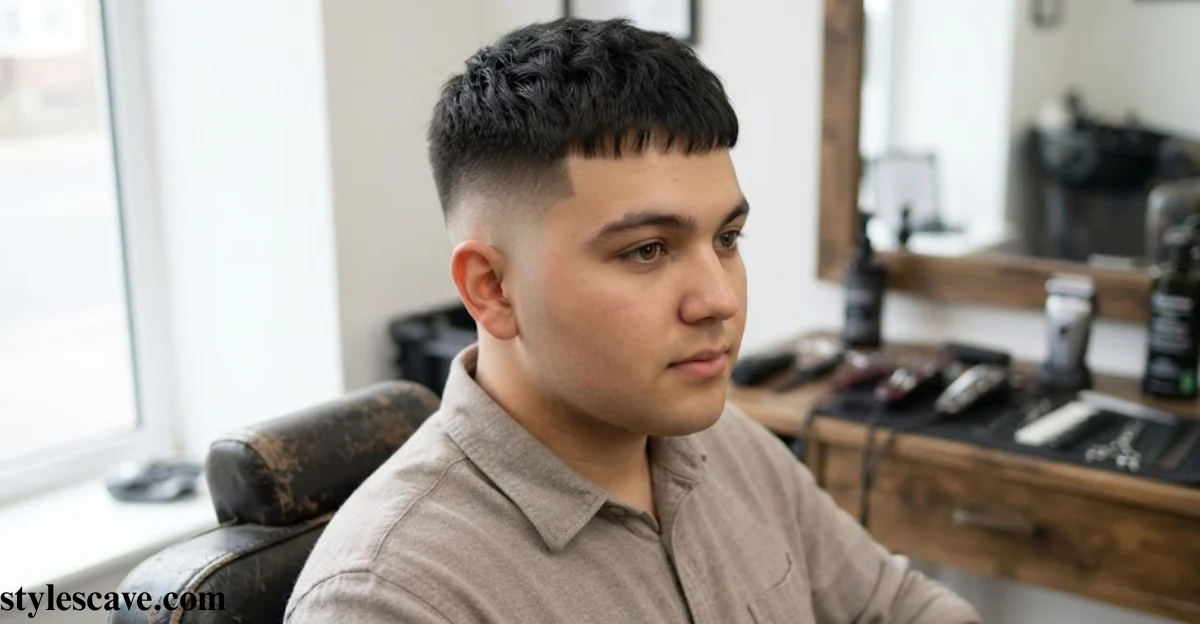
The skin-fade Edgar takes the sides down to skin while leaving the top longer, creating high contrast between the sides and the dominant top. The fringe remains a defining feature, while the blended sides create a sharp and clean silhouette.
Skin-tight sides make the textured top and sharp fringe stand out even more, giving this high-contrast haircut a strong visual effect. As the sides begin growing, the reduced contrast becomes noticeable, so regular maintenance helps preserve the clean blend and defined silhouette.
From my experience, I find that a skin fade works best for clients who enjoy a very clean and high-contrast Edgar haircut. I usually explain that the sides will need more frequent maintenance because even a small amount of growth can change the sharp appearance of the skin-tight sides.
6. Textured Edgar
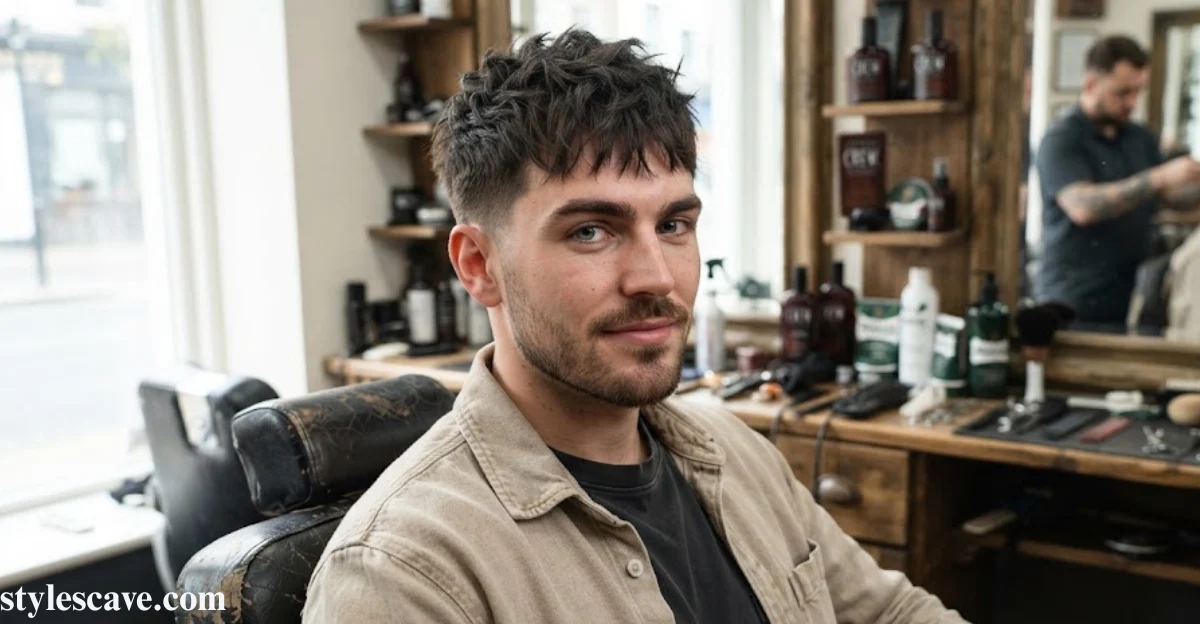
The textured Edgar adds separated texture across the top, creating movement and a less rigid appearance than a traditional Edgar. Uneven texture works especially well with thick hair and slightly wavy hair, giving the haircut a more dimensional finish while keeping the visible texture clear.
A lightweight matte product can enhance the textured top without creating the wet-looking effect associated with heavy pomade. Natural movement, a sharp front edge, and a textured fringe help maintain the Edgar shape while allowing the hair texture to remain visible.
I’ve noticed that clients with thicker or slightly wavy hair often get more character from a textured Edgar than from a very uniform style. I prefer using a matte product that separates the strands while keeping the sharp front edge clean and defined.
7. Curly Edgar
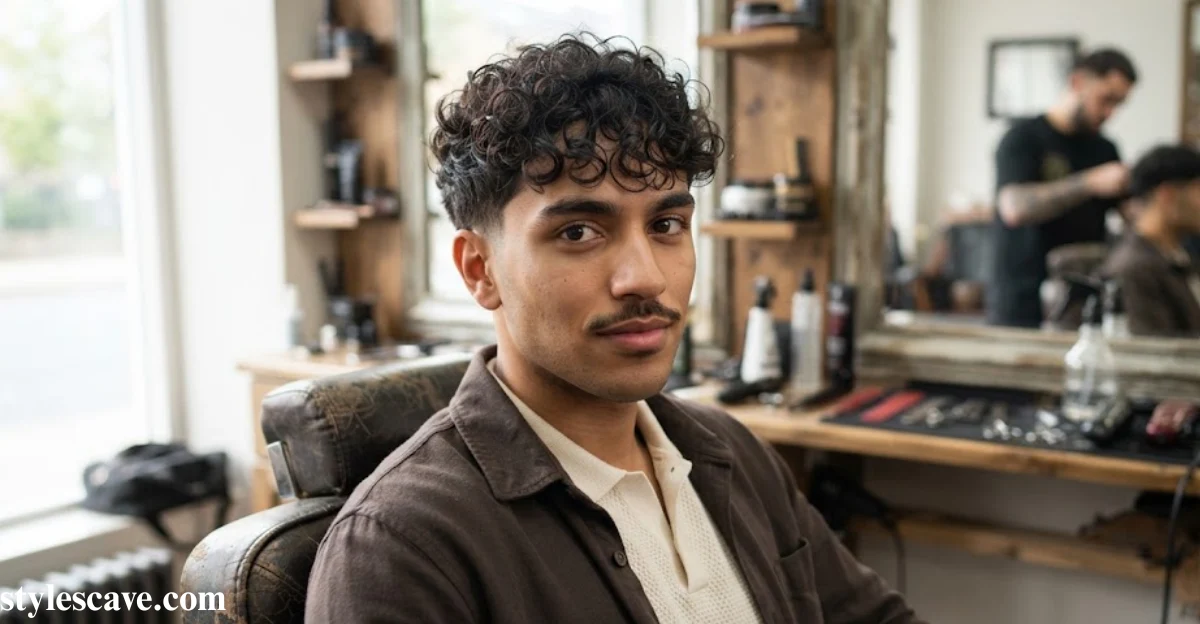
The curly Edgar keeps the recognizable fringe while allowing naturally curly hair and tightly textured hair to shape the top. The curl shape becomes a defining feature, giving the haircut a distinctive appearance that works with the natural texture rather than hiding it.
Curl shrinkage should be considered because curls become shorter as they dry, which can make a shorter fringe appear even more compact. A low taper or mid taper provides controlled sides and creates curl contrast between the curly top, defined fringe, and natural side control.
One detail I always pay attention to is the curl pattern before deciding the haircut length. Cutting the fringe with the curls in mind helps maintain better proportions, especially when the curls dry and naturally shrink around the top.
8. Wavy Edgar
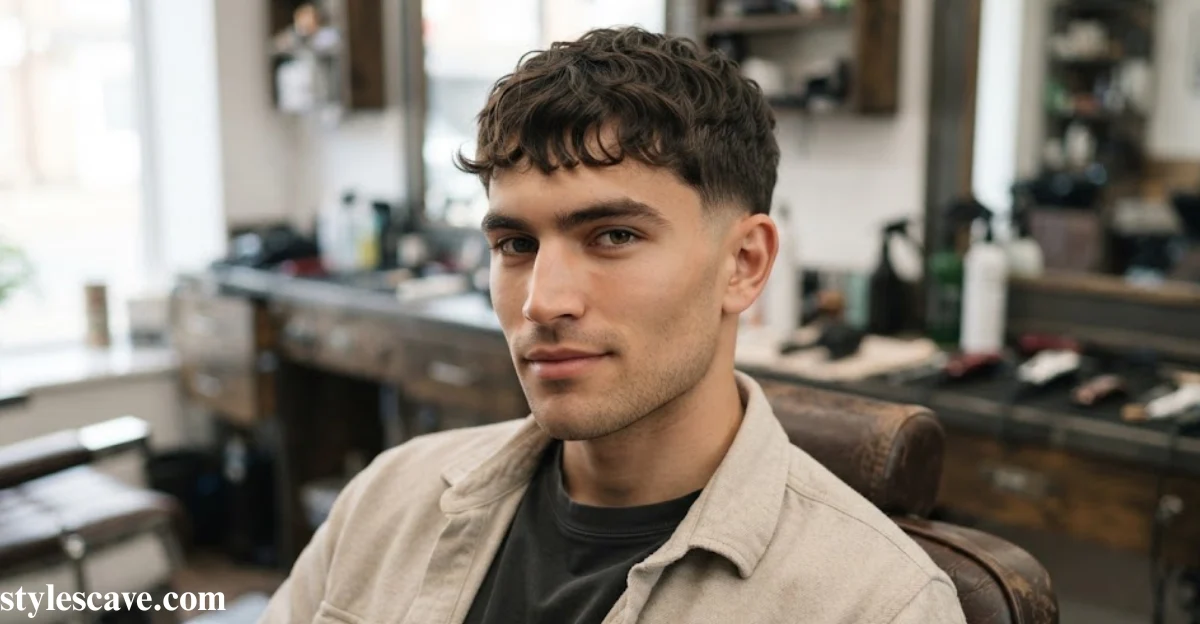
The wavy Edgar uses natural waves to create volume and movement through the top while keeping the characteristic front fringe. Compared with a straight Edgar or flat Edgar, the natural wave gives the haircut a softer appearance and adds visual interest without losing its recognizable shape.
A light matte cream or texture product can enhance the wavy texture while keeping the styling flexible. Natural movement, a textured top, and a defined fringe work together to create a soft haircut, while the right top length allows the wave-enhancing product to support the natural pattern.
When styling this look, I usually avoid products that make the top stiff or overly controlled. A flexible texture product lets the natural waves move freely while still giving the fringe enough definition to keep the Edgar shape noticeable.
9. Fluffy Edgar
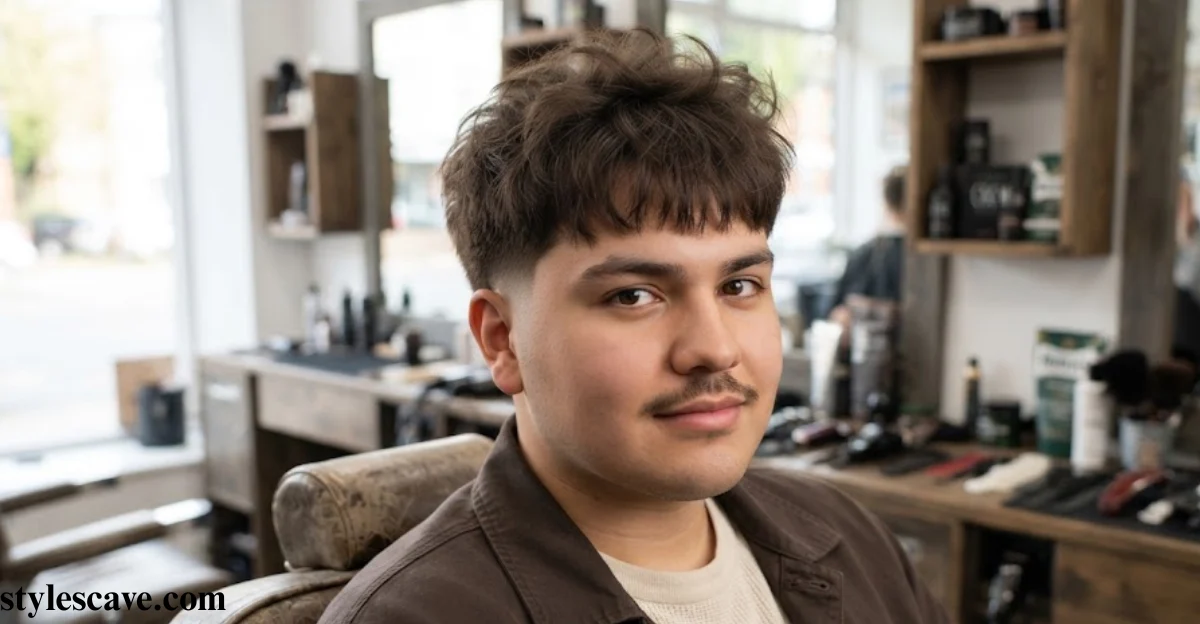
The fluffy Edgar brings more volume to the top while maintaining a defined front edge and tapered sides. Faded sides help create a fuller silhouette, making this version softer and more voluminous than the classic compact version while keeping its recognizable Edgar structure.
Thick hair is especially suitable for this style because weight removal can improve shape control without taking away natural volume. A textured top, defined fringe, tapered haircut, and faded haircut work together to create a fuller top with a controlled shape.
For clients who want extra volume, I find that careful weight removal makes the biggest difference. Taking out excess heaviness while preserving natural volume allows the top to stay fluffy and textured without becoming difficult to control.
10. Edgar With Mid Fade
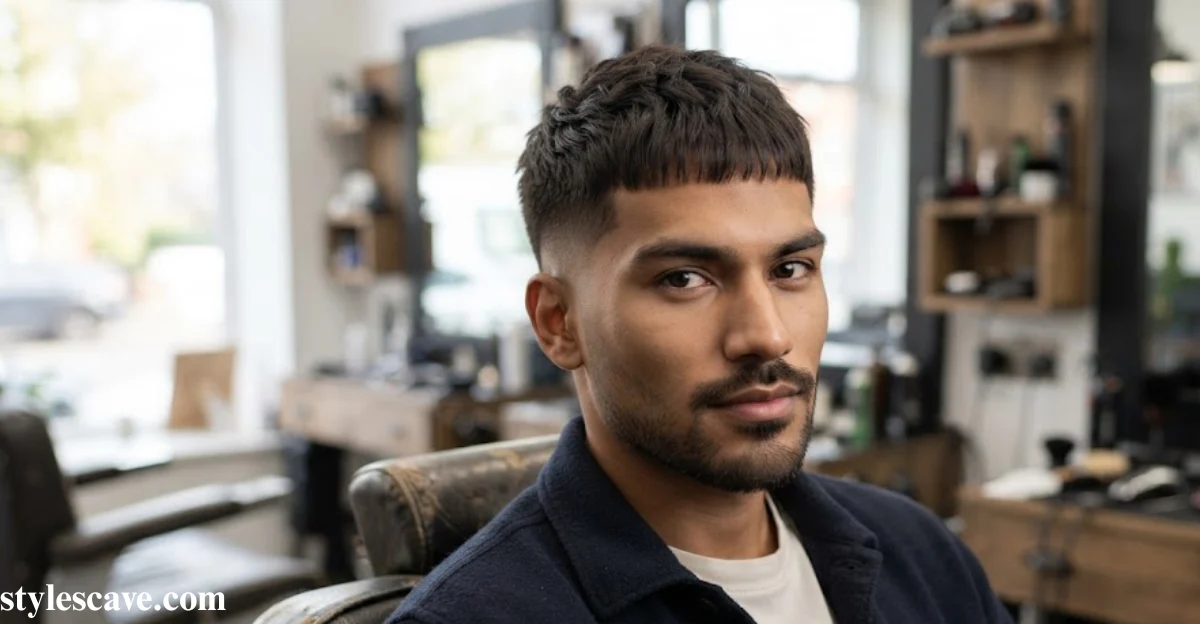
The mid-fade Edgar creates a noticeable transition through the sides while keeping the main focus on the top and fringe. It offers more contrast than a low fade but remains less dramatic than a high fade, making it a customizable variation of the modern haircut.
A mid fade works well with a textured top, curly top, or classic top, depending on the desired finish. The side transition creates fade contrast while the defined fringe and natural top maintain the versatile Edgar shape and balanced proportions.
I’ve found that the mid fade gives clients plenty of flexibility because the taper height can be adjusted to suit different face shapes and hair types. Keeping the top natural while refining the side transition usually creates a balanced, customized haircut.
11. Edgar With Line Design
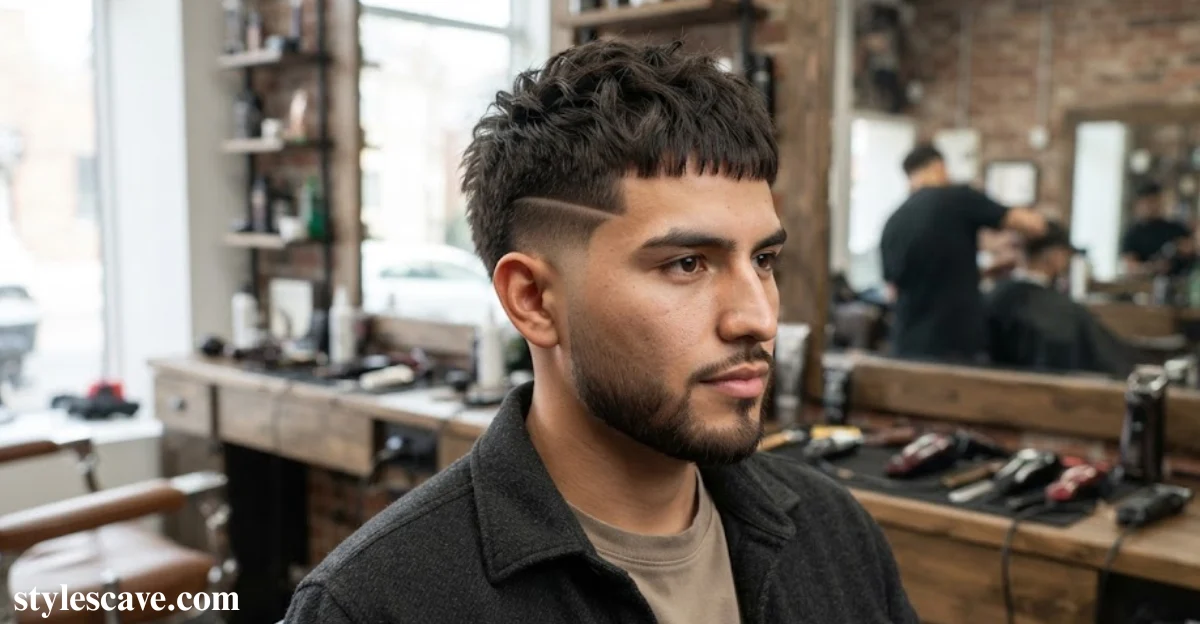
An Edgar with line design adds a shaved detail to the faded side while keeping the signature fringe as the main feature. A simple line can create a subtle visual element, while a more pronounced design gives the haircut stronger contrast and a distinctive side design.
A single clean line can work well when you want an intentional design without making the haircut overly complicated. The shaved line, faded sides, and haircut detail create visual contrast, while regular design maintenance helps keep the side detail sharp as the hair grows out.
When a client wants something more distinctive, I often suggest keeping the line design simple and clean. A well-placed shaved line can add personality without taking attention away from the Edgar fringe or making the faded sides look crowded.
12. Short Edgar
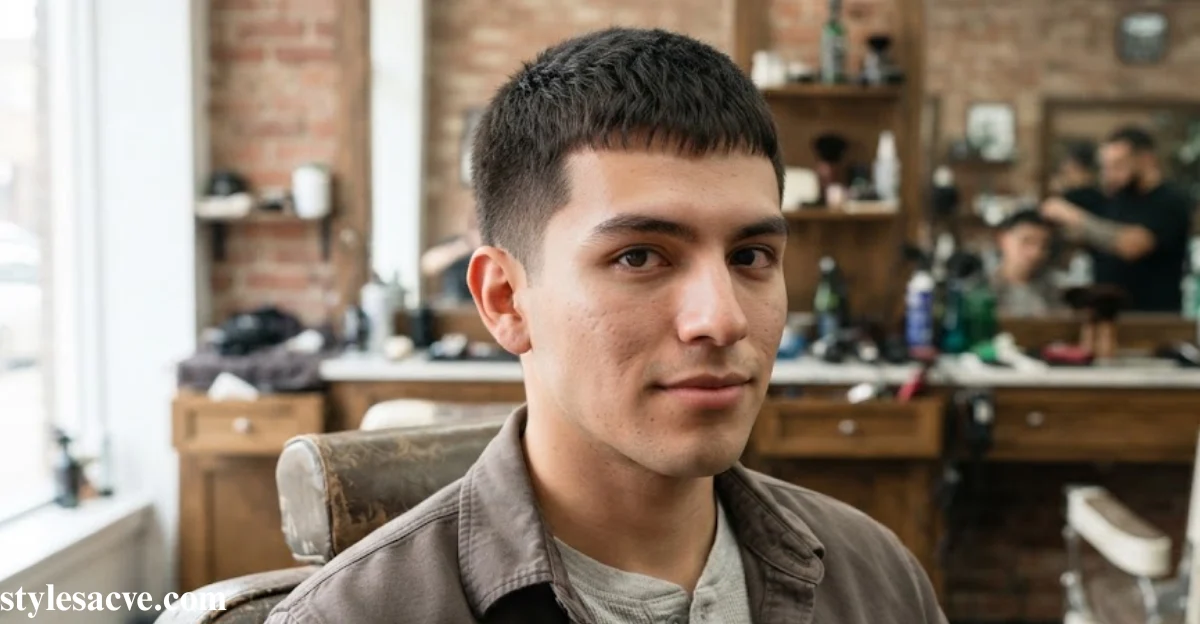
The short Edgar keeps the haircut compact through the top and fringe while maintaining a recognizable Edgar shape. Its short crop and defined front line create a clean silhouette, making it a practical low-maintenance style for someone who prefers shorter hair.
A compact length keeps the sharp fringe and defined front prominent, while faded sides create a clean side transition. The combination of a cropped top, Edgar shape, and short haircut gives the style a neat appearance with minimal styling requirements.
For clients who prefer simplicity, the short Edgar is one of the easier variations to maintain. I like keeping the front line crisp and the sides clean because these details preserve the haircut’s identity even when the overall length is kept very short.
13. Edgar With Beard
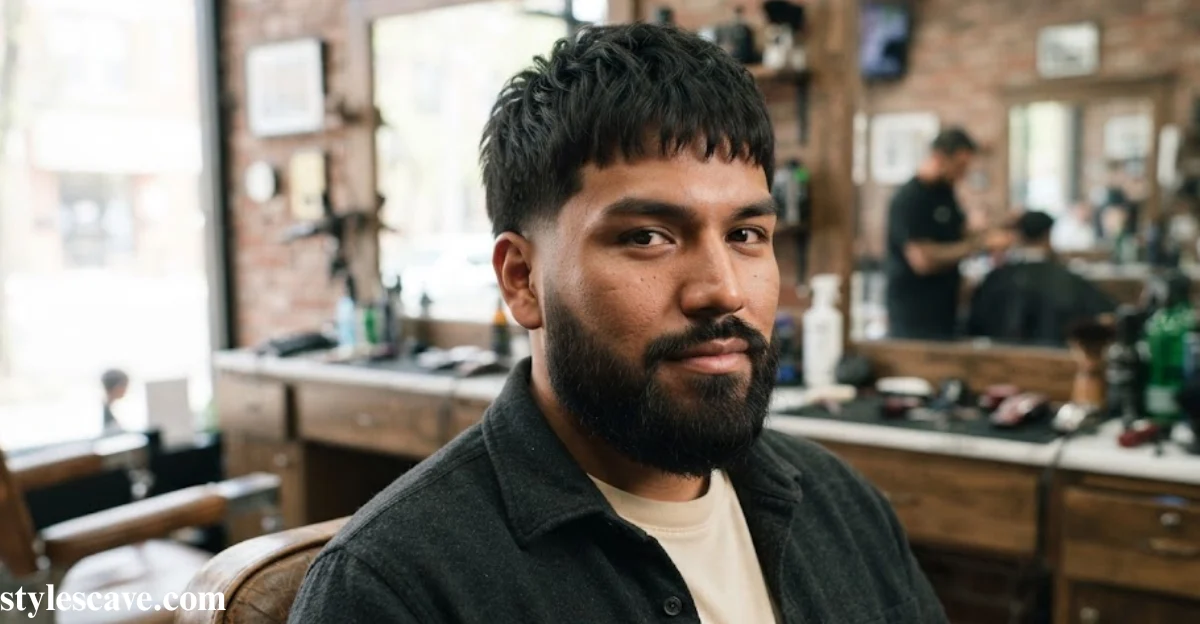
The Edgar with beard combines a sharp front and faded sides with facial hair, creating a strong connection between the haircut and lower face. Beard length plays an important role in overall balance, whether the client prefers a short beard or a fuller beard.
A clean transition between the faded haircut and facial hair can create strong contrast without making the look feel disconnected. The cropped hair, sharp haircut, and carefully shaped beard work together to balance the lower-face weight and create a polished finish.
One thing I consider carefully is the relationship between beard length and the haircut. A fuller beard can balance a very short Edgar, while a short beard often works better when the sides and top are kept especially sharp and defined.
14. Edgar Mullet
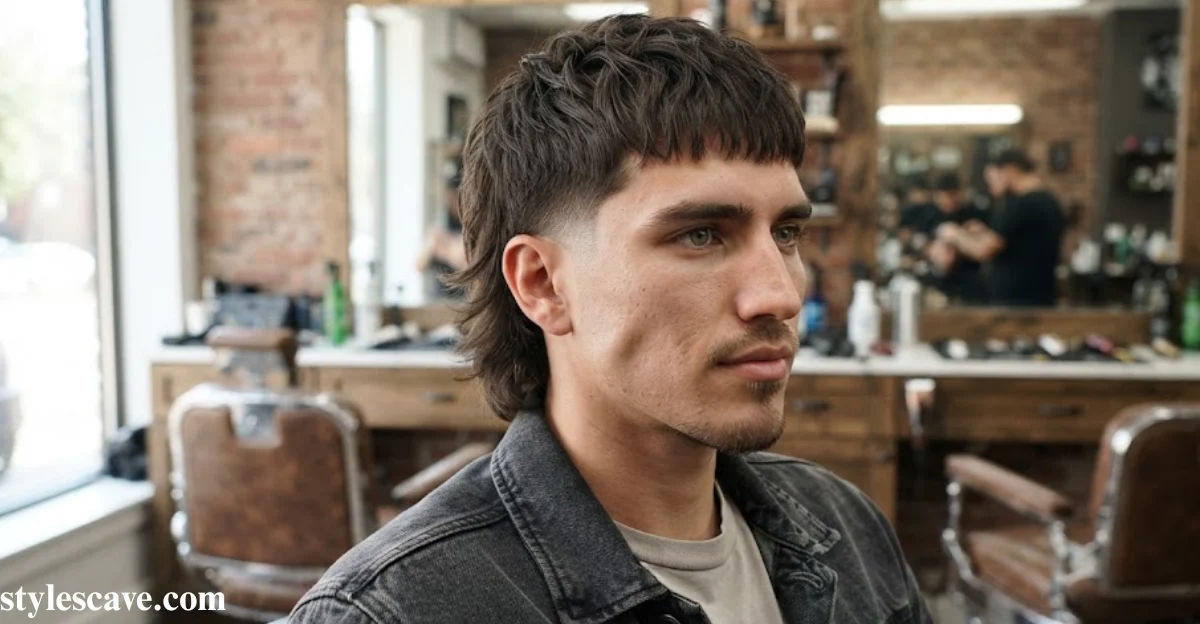
The Edgar mullet combines the short front and defined front of an Edgar with faded sides and extra length toward the back. The longer back introduces a mullet element, creating an experimental shape that looks noticeably different from a traditional Edgar.
The Edgar fringe keeps the front balance strong while the longer back adds contrast around the crown. Faded sides help connect the front and back sections, and careful haircut proportions are important for keeping the mullet shape intentional rather than uneven.
For a client interested in an experimental cut, I like treating the Edgar mullet as a balance between the standard Edgar and the longer-back silhouette. The front and side balance needs careful attention so the extra back length feels like a deliberate part of the haircut.
15. Edgar With Textured Fringe
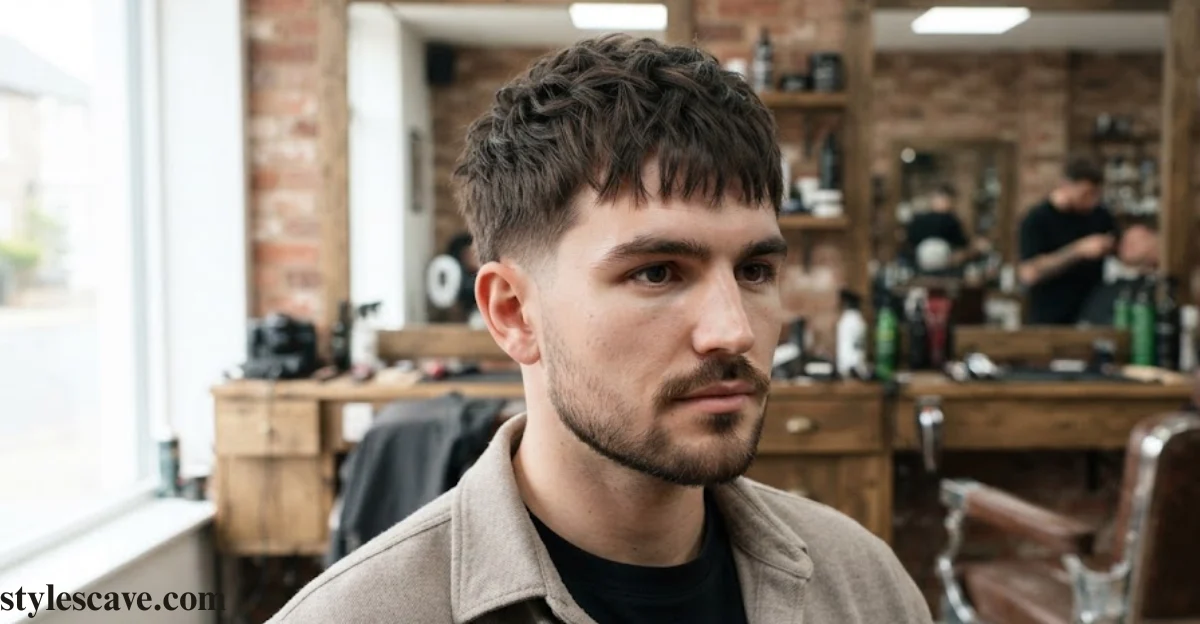
The textured-fringe Edgar adds visible texture to the front while keeping the defined front edge that gives the haircut its visual identity. Instead of looking like a flat top, the textured top creates movement and gives the typical textured crop a more modern finish.
A textured fringe works naturally with the Edgar shape because the forward-fringe style keeps attention toward the front. Natural texture, top movement, and a defined fringe create a flexible finish that can look structured without becoming overly rigid.
A detail that makes a difference here is how the fringe is separated and directed forward. I prefer keeping enough natural texture in the front to create movement while maintaining a clean edge, so the modern haircut still has the recognizable Edgar character.
Edgar Haircut vs Caesar Cut
The Edgar haircut and Caesar cut both feature short forward hair and a fringe, but their overall appearance can be quite different. An Edgar usually has a sharp front line, modern fade, or taper contrast, while a Caesar has a more traditional appearance with a compact haircut and defined fringe.
For an Edgar vs Caesar comparison, the main difference is often the sides and top. Edgar variations can include faded sides, tapered sides, textured top, and stronger contrast, while the Caesar generally keeps a compact top and softer contrast for a classic and structured appearance.
When comparing these two men’s haircuts with clients, I usually focus first on the fringe definition and side finish. Someone wanting a modern and bold look often prefers the stronger contrast of an Edgar, while a classic and structured style can make the Caesar cut a better choice.
Edgar vs French Crop
The Edgar haircut and French crop both use short sides and forward-facing hair, but the front finish creates an important distinction. An Edgar often has a stronger, straighter fringe, while a French crop can have a softer edge or more textured edge depending on the haircut.
In an Edgar vs French crop comparison, the defined fringe and straight fringe of an Edgar can look more structured than the softer fringe of a French crop. Looking at a clear hairstyle reference before the cut can help communicate the desired haircut and expected haircut result to a barber.
During a barber consultation, I always recommend discussing the exact haircut version rather than simply naming the style. Small differences in fringe shape, texture, and front finish can change the final result, so a good barber reference makes the desired haircut much easier to understand.
Conclusion
Edgar haircuts offer plenty of versatility for men who want a distinctive style with a clean and modern edge. The signature fringe can be paired with tapered sides, fades, textured tops or classic finishes to create a look that suits different hair types and personal preferences. Choosing the right variation depends on your hair texture, face shape desired length and how much styling you want to do each day. A skilled barber can also adjust the fringe and sides to create better balance and definition. The right cut and regular maintenance an Edgar hairstyle can give you a sharp, confident look that feels current and easy to personalize.
FAQs
What is an Edgar haircut?
An Edgar haircut is a short men’s hairstyle known for its defined, straight fringe across the forehead and closely cut or faded sides. The top can be styled with different lengths and textures.
Which Edgar haircut is best for men?
The best Edgar variation depends on your hair type, face shape, and preferred style. Tapered, faded, textured, and classic Edgar cuts can each create a different appearance.
Is an Edgar haircut good for thick hair?
Yes. Thick hair can work especially well with an Edgar because the top provides enough density for a defined fringe and textured finish. Your barber can remove some bulk if needed.
How do you maintain an Edgar haircut?
Regular trims help keep the fringe, sides, and overall shape sharp. Depending on the style, you may also need a small amount of styling product to maintain texture and definition.
Can an Edgar haircut work with curly or wavy hair?
Yes. Curly and wavy hair can create a more textured version of the Edgar. The fringe and sides can be shaped to work with your natural texture rather than requiring a completely straight finish.





- Be Respectful
- Stay Relevant
- Stay Positive
- True Feedback
- Encourage Discussion
- Avoid Spamming
- No Fake News
- Don't Copy-Paste
- No Personal Attacks
- Be Respectful
- Stay Relevant
- Stay Positive
- True Feedback
- Encourage Discussion
- Avoid Spamming
- No Fake News
- Don't Copy-Paste
- No Personal Attacks
