A Basic Guide for Men’s Hair Care
Published: 22 Sep 2026
Healthy-looking hair starts with a simple routine that fits naturally into everyday life. For men, proper hair care can help manage common concerns such as dryness, excess oil, buildup frizz and an unhealthy-looking scalp. The right combination of cleansing, conditioning, grooming and styling habits can make hair easier to manage while supporting its overall appearance. You do not need a complicated shelf of products to build an effective routine. This basic guide to men’s hair care covers practical habits and essential tips to help you keep your hair and scalp looking clean healthy and well-groomed.

Table of Contents
Why Men’s Hair Care is Important
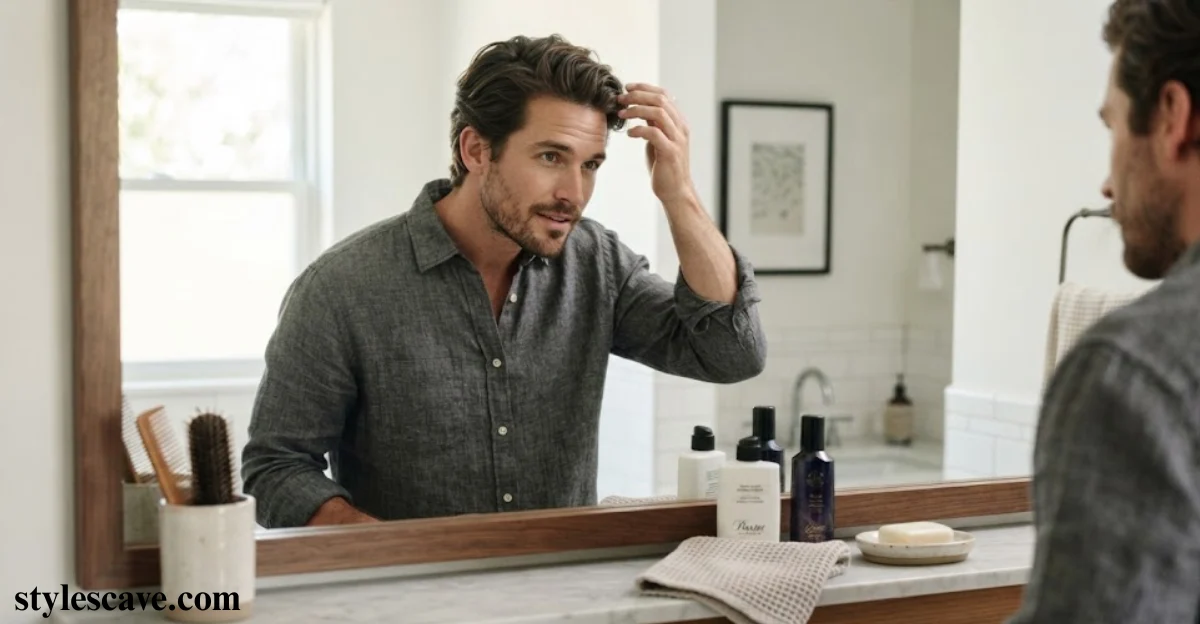
Keeping lovely hair is not only about appearance; it can also make everyday daily experiences easier and more comfortable. Pollution, heat styling, chemical products and damaging sun exposure can gradually affect the condition of the hair and scalp. Even frequent shampooing with a harsh hair care routine may leave the strands feeling dry, weak, or difficult to manage.
Good hair health starts with understanding the common concerns men experience including hair thinning shedding, dandruff itchy scalp, frizz and lack of volume. A basic men’s hair care routine can help keep these hair problems under control by combining suitable cleansing conditioning scalp care and protection. Most importantly, following a consistent routine makes it easier to maintain healthier-looking hair over time.
From my experience as a hairstylist, I’ve noticed that many men pay attention to their haircut but overlook the condition of the hair underneath it. Simple habits such as choosing suitable products and avoiding unnecessary heat can make everyday grooming much easier. I also find that clients who follow a consistent routine tend to understand their hair texture and scalp needs better.
Simple Steps for Best Hair Care for Men

1. Know Your Hair Type
Before choosing products or building a routine, identify your hair type and its main characteristics so your product selection matches your actual hair needs.
- Identify Your Hair Type: Determine whether you have oily hair, dry hair, or normal hair, then consider whether your strands are curly, wavy, thin, or thick.
- Understand Hair Characteristics: Pay attention to how quickly your scalp becomes oily, how your strands respond to moisture, and whether your hair tends to feel heavy, dry, or difficult to manage.
- Choose the Right Products: Use your hair type to guide product selection, choosing formulas that support your specific hair needs instead of following a routine designed for another texture.
- Support Curly Hair: For curly hair care for men, prioritize moisturization and products that help maintain moisture without weighing down the curls.
- Handle Hair Gently: Gentle detangling can reduce unnecessary pulling and make your overall hair care routine easier while supporting long-term hair maintenance.
In my experience as a hairstylist, understanding hair type is one of the first things I discuss with male clients before recommending products. I’ve seen the same product perform very differently on oily, dry, curly, and straight textures. Once a man understands what his hair actually needs, choosing suitable products becomes much simpler.
2. Shampoo
Build your shampoo routine around your scalp and hair needs rather than washing automatically every day.
- Avoid Over-Shampooing: Daily shampooing can remove too many natural oils, so over-shampooing may contribute to dry hair and make hair breakage more noticeable.
- Choose a Gentle Formula: A sulfate-free shampoo can be a useful option for men who want regular cleansing while maintaining better hair health and comfort.
- Set a Routine: For many men, shampooing 2–3 times a week provides a practical starting point, although hair washing should still depend on scalp oiliness and activity.
- Manage Dandruff: If dandruff is persistent, a medicated shampoo may be more appropriate as part of targeted scalp care and dandruff treatment.
- Protect Natural Oils: Keep your shampoo routine balanced so natural oils are not unnecessarily stripped, helping reduce hair dryness and supporting easier hair maintenance.
From my work as a hairstylist, I often find that men shampoo more frequently than their hair actually requires. I usually encourage clients to pay attention to how their scalp and strands feel after washing rather than following a fixed schedule blindly. When the routine is adjusted to the individual’s needs, hair often feels easier to manage. A balanced approach also makes styling and regular maintenance much simpler.
3. Conditioner
Add conditioner consistently after cleansing to replenish moisture and keep the hair softer, smoother, and easier to handle.
- Restore Moisture: Conditioner supports moisture and hair hydration after washing, helping maintain comfortable, manageable strands.
- Control Frizz: Regular use can improve frizz control by helping the surface feel smoother and making the natural hair texture easier to manage.
- Support Hair Strength: Conditioning contributes to healthier hair by improving softness and helping support hair strength during everyday grooming.
- Long Hair Care: Men following men’s hair care for long hair should pay particular attention to their conditioning routine because longer strands need consistent care through the lengths.
- Protect Hair Moisture: Using conditioner as part of a regular hair care routine helps maintain hair moisture while providing additional hair protection during brushing and styling.
Personal Experience: One thing I consistently recommend to my long-haired clients is not to treat conditioner as an optional step. I notice a clear difference in how easily the hair moves and detangles when enough moisture is maintained. It is especially helpful when the ends become rough or difficult to control. For me, good conditioning is one of the simplest ways to make everyday hair care feel more manageable.
4. Tackle Hair Problems
Identify the cause of your hair problems before adding more products, because the right approach depends on whether you are dealing with hair loss, dandruff, dryness, or another common hair concern.
- Recognize Hair Concerns: Hair problems such as hair loss and dandruff can have different causes, so pay attention to changes in your scalp and strands before choosing a routine.
- Limit Harsh Styling Products: Reduce frequent use of chemical-heavy gels and sprays, especially when they leave the hair dry, coated, or more prone to damage.
- Use Supportive Ingredients: Oils such as castor oil and argan oil can add conditioning to the routine, while biotin supplements should only be considered when appropriate rather than used automatically.
- Massage the Scalp: Gentle scalp massage can be included in regular scalp care and may temporarily increase blood circulation, but it should not be treated as a guaranteed hair loss prevention method.
- Remove Buildup: Dry skin and product buildup can make the scalp uncomfortable, so use appropriately diluted shampoo and rinse thoroughly to remove residue.
When clients come to me with several hair concerns at once, I usually start by simplifying their routine instead of adding more products. I’ve found that excessive styling products and incomplete rinsing can sometimes make the hair feel worse. Scalp massage is also something I like incorporating as a relaxing care step, while keeping expectations realistic. A cleaner, simpler routine often makes it easier to understand what the hair actually needs.
5. Pamper Your Hair
Give your hair an occasional conditioning treatment using simple ingredients, but keep the application gentle and avoid turning DIY care into an unnecessarily complicated routine.
- DIY Treatment: A natural DIY treatment can provide an occasional hair treatment using familiar kitchen ingredients as part of a simple hair care routine.
- Olive Oil and Honey: Combine equal parts olive oil and honey to create a basic treatment using natural ingredients that can add softness to the strands.
- Apply Carefully: Work the mixture through the hair application, focusing on the hair strands rather than heavily coating the scalp, and leave it for around 30 minutes.
- Cleanse Thoroughly: Use a mild shampoo to rinse off the mixture and complete the hair cleansing process without leaving an oily residue behind.
- Weekly Nourishment: Using this type of treatment once a week can provide additional hair nourishment and help maintain softer, healthier-looking strands.
I like simple at-home treatments when clients want an easy way to add occasional nourishment to their routine. Olive oil and honey are especially straightforward because they require very little preparation. I usually recommend keeping the treatment focused on the lengths and rinsing thoroughly afterward. For me, the key is moderation a weekly care step should complement regular maintenance rather than replace it.
6. Choose the Right Hair Products
Match every styling product to your hair texture, desired finish, and level of control instead of choosing products based only on popularity or packaging.
- Clay: In a men’s hair product guide, clay is useful when you want a matte finish with added volume, particularly for fine hair or thinning hair.
- Cream: A lightweight cream can provide flexible control while working well with wavy hair and curly hair without creating an overly heavy appearance.
- Gel: Gel is suitable when you need strong hold or a wet look, but alcohol-based gels may feel drying for some hair types when used frequently.
- Serum: A serum can support frizz control and add smoothness, making it useful when you want a softer-looking hair texture without heavy styling.
- Product Selection: Build your hair products around your actual hair care needs, considering texture, thickness, desired hold, and the finish you want before making a purchase.
From a hairstyling perspective, I’ve learned that the most expensive product is not necessarily the most useful one for a particular client. I usually look at the hair texture first and then decide whether the goal is volume, control, softness, or definition. Fine hair often needs a lighter approach, while thicker textures may handle stronger formulas. Once the product selection matches the hair instead of fighting it, styling becomes much easier.
3 Tips for Men’s Hair Care
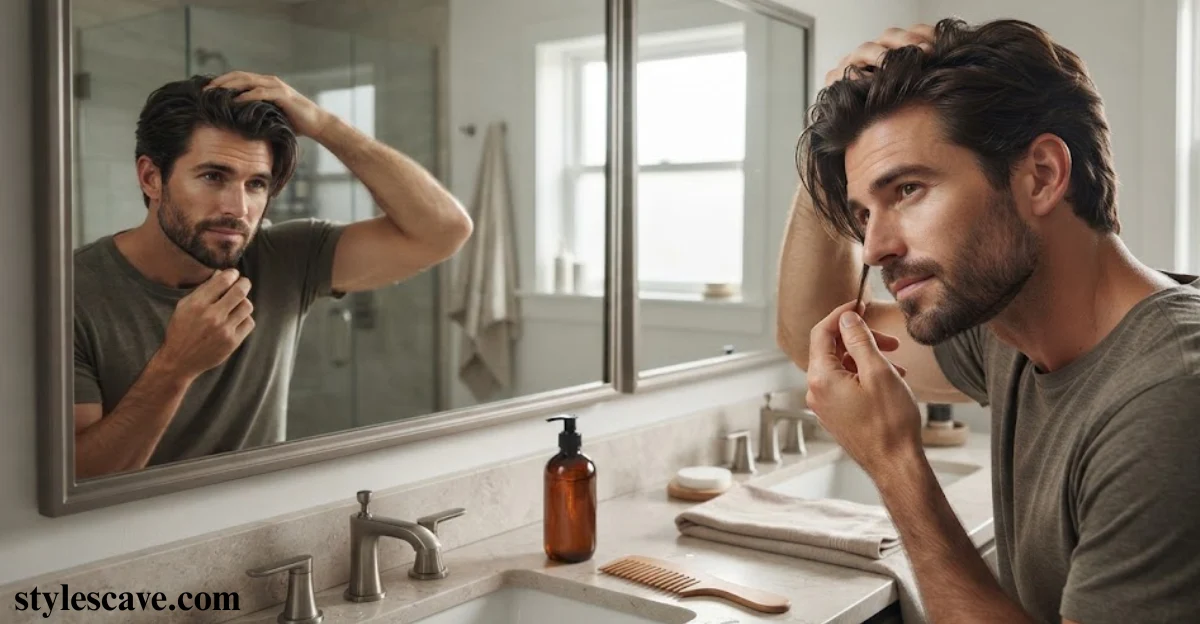
Healthy-looking men’s hair starts with a simple daily hair care routine that protects the strands from everyday stress. Small habits such as handling wet hair carefully and avoiding rough brushing can reduce hair breakage and unnecessary damage. Using gentle techniques consistently makes hair easier to manage while supporting long-term hair health.
Good hair care also depends on what happens beyond your bathroom routine. Hydration, a balanced diet and enough sleep can support hair strength, natural hair shine and overall hair condition. Even switching to a silk pillowcase can reduce friction while you sleep, helping limit frizz and breakage.
- Be Gentle With Wet Hair: Wet hair is more vulnerable to hair damage, so avoid aggressive brushing immediately after washing. Let excess water drain naturally, then use a wide-tooth comb for gentle detangling and less unnecessary stress on the strands.
- Choose a Wide-Tooth Comb: A wide-tooth comb creates more space between the teeth, making it useful for gentle detangling. Start from the ends and gradually work upward to reduce pulling and support better breakage prevention.
- Stay Hydrated and Eat Well: Staying hydrated and maintaining a balanced diet can complement your regular hair care routine. Nutrient-rich meals and adequate fluids support the body’s normal processes that contribute to hair strength, shine, and overall condition.
- Reduce Friction While Sleeping: A silk pillowcase can help with friction reduction during sleep, especially if your hair becomes tangled or frizzy overnight. Less rubbing against the pillow may help with frizz prevention and minimize avoidable breakage.
- Keep Your Routine Consistent: Effective hair care does not have to be complicated. A practical daily routine built around gentle handling, hydration, suitable grooming tools, and regular maintenance can make breakage prevention easier while supporting overall hair health.
From a hairstyling perspective, I often notice that clients focus heavily on products while overlooking how they handle their hair every day. Simple changes like combing more gently, being careful with wet strands, and reducing nighttime friction can make a noticeable difference in how manageable the hair feels over time.
Curly Hair Care for Men: Special Tips
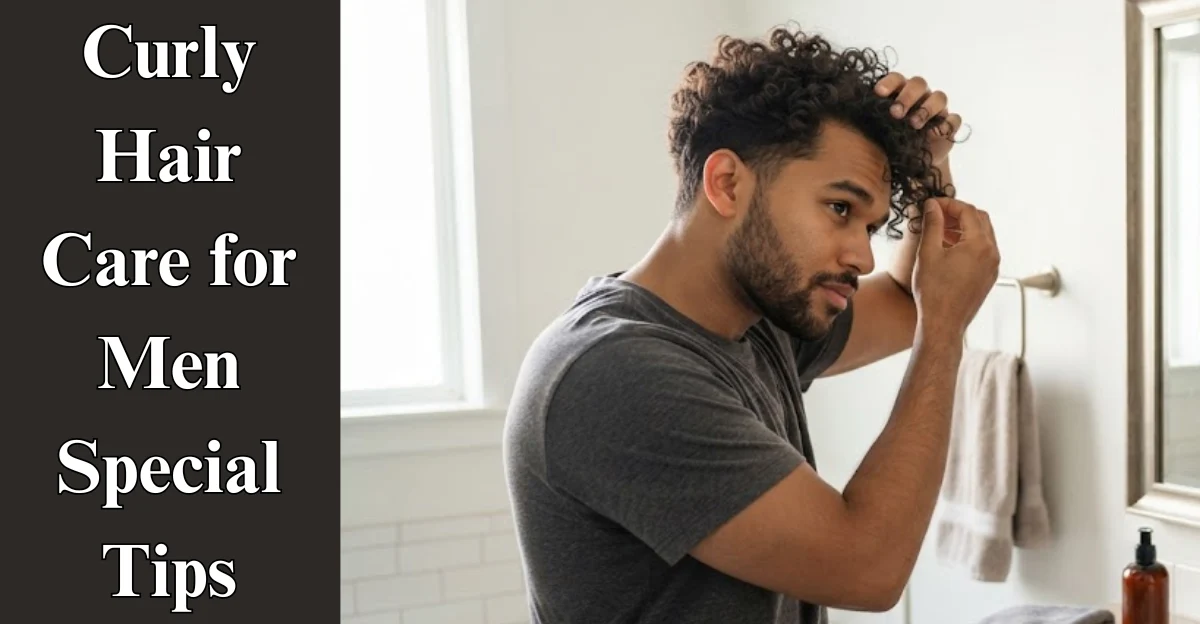
Curly hair needs extra care because its natural shape can make moisture harder to distribute evenly through the strands. A gentle moisturizing shampoo can help keep the scalp clean without unnecessarily stripping away natural oils. Regular washing should focus on maintaining a clean scalp while avoiding excessive cleansing that may leave curls feeling dry.
Keeping curls hydrated is equally important for maintaining their natural structure and movement. Deep conditioning can help create soft, manageable curls while supporting better moisture retention, curl shape, and curl bounce. With consistent care, hydrated curls are easier to define and can maintain a healthier-looking appearance.
- Detangle in the Shower: Avoid aggressive brushing because it can increase hair breakage and frizz. Instead, use a wide-tooth comb while the hair is wet and slippery, allowing gentle detangling with less pulling and helping minimize damage.
- Protect Your Natural Curl Pattern: Work through the hair gently rather than repeatedly separating or stretching the curls. Careful handling helps preserve curl definition and allows the natural curl pattern to form without unnecessary disruption.
- Use Leave-In Conditioner: A leave-in conditioner can provide additional moisture after washing and make curls easier to manage. Apply a suitable amount through damp hair to support softness and help maintain a polished look.
- Add Curl Cream When Needed: Curl cream can help enhance definition while providing moisture to curls that feel dry or difficult to shape. Distribute it evenly through damp hair and allow the curls to settle naturally for more well-defined hair.
- Build a Consistent Routine: A practical men’s hair care routine should include suitable cleansing gentle detangling, and moisture support. Consistency with curly hair care makes it easier to maintain healthy curls without overloading the strands with unnecessary products.
From my experience working with clients who have naturally curly hair, the biggest improvement often comes from changing how the curls are handled rather than simply adding more products. Gentle shower detangling, proper moisture, and allowing the curl pattern to form naturally can make the hair look more defined while keeping the routine manageable.
Conclusion
Men’s hair care does not have to be complicated to make a noticeable difference. A consistent routine built around proper cleansing, conditioning, scalp care, and gentle styling can help maintain healthier-looking and more manageable hair. Understanding your hair type also makes it easier to choose products that suit your specific needs. Simple habits such as avoiding excessive heat and keeping your scalp clean can support better overall hair care. With regular attention and the right routine, maintaining clean, strong, and well-groomed hair can become an effortless part of everyday life.
FAQs
How often should men wash their hair?
The ideal frequency depends on your hair type, scalp, and lifestyle. Oily hair may need more frequent washing while dry or curly hair may benefit from less frequent shampooing.
Is conditioner necessary for men’s hair?
Conditioner can help improve softness, manageability, and moisture. It is especially useful for dry, coarse, curly or longer hair.
How can men keep their scalp healthy?
Use a suitable shampoo, rinse products thoroughly, avoid excessive buildup, and maintain a regular washing routine. Avoid scratching or aggressively scrubbing the scalp.
How do I choose the right hair products for my hair type?
Consider whether your hair is oily, dry, fine, thick, curly, or straight before choosing products. Lightweight formulas may suit fine or oily hair while moisturizing products can benefit dry or coarse hair.
What habits can damage men’s hair?
Excessive heat styling, harsh chemical treatments, rough towel drying, tight hairstyles, and overuse of styling products can contribute to dryness or breakage. Gentle handling and balanced product use can help protect your hair.






- Be Respectful
- Stay Relevant
- Stay Positive
- True Feedback
- Encourage Discussion
- Avoid Spamming
- No Fake News
- Don't Copy-Paste
- No Personal Attacks
- Be Respectful
- Stay Relevant
- Stay Positive
- True Feedback
- Encourage Discussion
- Avoid Spamming
- No Fake News
- Don't Copy-Paste
- No Personal Attacks
