15 Beauty Sleep Secrets Dermatologists Swear By (2026)
Published: 31 Aug 2026
Your nighttime routine can do more for your skin than another expensive product sitting on your shelf. While you sleep, your skin gets valuable time to recover from the stress and environmental exposure of the day, making your bedtime habits worth paying attention to. These beauty sleep secrets bring together practical dermatologist-backed habits that can support healthier-looking, refreshed skin by morning. Keep reading to discover simple changes that can turn your nightly routine into a smarter part of your skincare routine.

Table of Contents
Beauty sleep and why it matters

Getting enough sleep does more than make you feel rested the next morning; it can also influence how your skin and overall appearance look. When your body gets consistent rest, your skin has more time to recover from the everyday stress it faces, helping you look fresher and more naturally energized.
A night of poor sleep can show up quickly around the eyes and face, making you appear tired or washed out. Over time, insufficient rest may also affect the skin’s ability to maintain its normal renewal and protective functions, which can make signs of aging more noticeable.
- During sleep, your body shifts attention toward recovery and routine cellular processes. This gives the skin time to renew itself and maintain a healthier-looking surface.
- Consistent rest supports the processes that keep your skin’s protective barrier functioning properly. A stronger barrier can help the skin cope with everyday exposure to the environment.
- Too little sleep can leave the eyes looking red, puffy, or surrounded by darker areas. Getting enough rest can help your face appear more refreshed and awake.
- Nighttime is an important period for the body to recover from daily stress caused by factors such as sunlight and pollution. Good sleep gives these natural repair processes time to work.
- Regular, quality sleep can contribute to a healthier overall appearance rather than simply masking tiredness. It works alongside basic habits such as hydration, sun protection, and a consistent skincare routine.
I’ve noticed that my skin looks noticeably fresher after several nights of consistent sleep, especially around the eyes. When my sleep schedule gets disrupted, dullness and puffiness are usually among the first things I notice. For me, good rest has always been one of the simplest parts of maintaining a healthy-looking complexion.
Secret 1: Stick to 7–9 beauty sleep hours

Getting around seven to nine hours of restful sleep each night can make a noticeable difference in how refreshed you look and feel. Rather than relying heavily on makeup or other quick fixes, giving your body enough time to rest supports a naturally healthier-looking complexion and brighter appearance.
How many hours is beauty sleep?
For most adults, seven to nine hours is a practical target for quality rest, especially when the schedule stays consistent. During the night, the body carries out important recovery processes that support skin renewal, circulation, and the maintenance of its protective barrier.
Research on sleep and skin health suggests that people who regularly sleep well tend to show healthier signs of recovery than those who routinely get very little rest. A steady bedtime, reduced screen use, and relaxing nighttime habits can make it easier to maintain that routine.
Why consistency matters for skin repair
Going to bed and waking up at roughly similar times gives your body a predictable rhythm for recovery. Regular rest allows processes involving nutrient delivery, collagen maintenance, elasticity, and barrier recovery to happen without repeatedly being interrupted.
By contrast, frequently sleeping five hours or less can leave your appearance looking more tired and may make it harder for the skin to recover from daily stressors such as UV exposure and pollution. Consistency matters just as much as occasionally catching up after several poor nights.
- Set a realistic bedtime: Choose a bedtime that gives you enough opportunity to reach your nightly sleep target. Keeping it similar throughout the week makes the habit easier to maintain.
- Protect your wind-down time: Gentle stretching, dimmer surroundings, or a few quiet minutes before bed can help signal that the day is ending. Try to step away from electronics close to bedtime.
- Avoid relying on occasional catch-up sleep: One long night cannot completely replace a pattern of insufficient rest. Your body benefits more from getting adequate sleep across consecutive nights.
- Give your skin time to recover: Nighttime provides an important window for routine cellular maintenance and repair. Consistent rest supports the processes that help maintain a healthy complexion and protective barrier.
- Watch how your skin responds: Pay attention to changes in dullness, puffiness, or overall freshness when your sleep becomes more regular. These everyday observations can help you understand what works best for your routine.
I’ve found that keeping my bedtime fairly consistent makes a bigger difference than simply sleeping longer once in a while. After several nights of proper rest, my complexion tends to look clearer and more refreshed without needing much corrective makeup. It has become one of the simplest habits I rely on for maintaining a healthy-looking appearance.
Secret 2: Cleanse your face before bed

A proper nighttime cleanse removes the day’s buildup before you settle down to sleep. Makeup, sunscreen, natural oils, and environmental residue can remain on the surface for hours, so washing your face gives it a cleaner starting point for overnight recovery.
Removes dirt, oil and makeup
Throughout the day, your skin collects sebum, cosmetics, sweat, sunscreen, and particles from the surrounding environment. Cleansing before bed helps remove this mixture along with leftover creams and dead cells, leaving the surface fresh and ready for your nighttime routine.
Even on exhausted nights, a simple cleanse is better than sleeping with everything still on your face. Makeup wipes can be useful when you are too tired for a full routine, but following with a gentle facial cleanser is preferable when possible.
Prevents clogged pores and breakouts
Leaving makeup, SPF, oil and pollution residue on the skin overnight can contribute to pore blockage and irritation particularly if you already have acne-prone skin. A gentle evening cleanse helps remove these impurities without unnecessarily disturbing the skin barrier.
Clean skin also allows your nighttime products to sit more effectively on the surface while your body goes through its normal recovery processes. Keeping the routine gentle is important because excessive cleansing can increase dryness, sensitivity, and inflammation.
- Remove makeup first: Take off foundation, concealer, eye makeup, and other cosmetics before cleansing your face. This prevents leftover product from mixing with natural oils throughout the night.
- Wash away daily buildup: Use a gentle cleanser to lift away sunscreen, sweat, sebum, and environmental impurities. Pay attention to areas where products tend to collect, such as around the nose and hairline.
- Avoid aggressive scrubbing: Rubbing too hard can leave the skin feeling irritated and uncomfortable. Gentle movements are usually enough to remove surface residue without unnecessarily stressing the barrier.
- Keep acne-prone skin in mind: If your pores become blocked easily, make evening cleansing a consistent part of your routine. Removing trapped oil and residue can help keep the skin feeling cleaner and calmer.
- Follow with simple skincare: Once your face is clean, apply the nighttime products that suit your skin rather than layering too many formulas. A straightforward routine can support comfortable, well-maintained skin overnight.
I’ve noticed that my skin feels noticeably fresher the morning after I properly remove everything before bed. On busy nights, I used to skip cleansing when I was tired, but making it a quick habit has been much easier than dealing with a dull or congested-looking complexion the next day.
Secret 3: Use a hydrating night cream

A good night cream can be a simple way to support comfortable, well-hydrated skin while you sleep. Since the skin goes through its normal recovery processes at night, applying a suitable moisturizer helps reduce moisture loss and leaves the complexion feeling softer by morning.
Benefits of sleep for skin hydration
During nighttime rest, blood flow delivers essential nutrients while the skin carries out its natural repair and renewal processes. Using a quality formula during these hours can support the skin barrier and help maintain moisture when the skin is most receptive to your routine.
Ingredients such as ceramides, hyaluronic acid, peptides and niacinamide can provide different benefits depending on the formula. Regular moisturizing can leave the skin feeling plumper, smoother, and more comfortable while supporting a healthy-looking radiant appearance.
Choosing the right moisturizer for your skin type
Dry skin often benefits from richer formulas containing emollients, ceramides, hyaluronic acid, or urea because these ingredients can help reduce water loss. For oily or combination skin, a lightweight gel moisturizer labeled non-comedogenic may feel more comfortable and reduce the chance of a greasy finish.
- Sensitive skin generally does better with gentle, fragrance-free formulas containing fewer ingredients and soothing components. If your skin is mature, you may prefer a night cream with peptides or other ingredients aimed at improving the appearance of fine lines while keeping your routine simple.
- Match the formula to your skin: Start by considering whether your complexion is dry, oily, combination or sensitive. The right texture should provide comfort without leaving excessive heaviness.
- Look for barrier-supporting ingredients: Ceramides can help support the skin’s protective barrier, while hyaluronic acid helps attract and retain moisture. These can be useful additions when dryness is your main concern.
- Keep oily skin lightweight: Gel-based or non-comedogenic moisturizers can provide hydration without feeling overly greasy. This can be especially useful when heavier creams tend to feel uncomfortable.
- Apply a small amount: You do not need to cover your face with a thick layer for a moisturizer to work comfortably. I prefer using small dots across the face and gently spreading them until the product is absorbed.
I’ve found that my skin feels much more comfortable the next morning when I use a moisturizer suited to its current needs rather than simply choosing the richest cream available. On drier nights, I reach for a more nourishing formula, while lighter textures work better when my skin feels oily or heavy.
Secret 4: Apply a retinol or serum treatment

Adding a targeted serum or retinol treatment to your evening routine can support specific skin concerns while you sleep. Retinol is a vitamin A derivative commonly used in skincare for improving the appearance of fine lines, uneven texture, and tone, but it should be introduced gradually to help your skin adjust.
Boosts collagen and cell turnover
Retinol works by influencing processes involved in cell turnover and collagen production, helping the skin gradually appear smoother and more refined. With consistent use, it may improve the look of fine lines and wrinkles while supporting a firmer, more youthful-looking complexion.
The changes are gradual rather than overnight, with noticeable improvement often taking several weeks or months. Skin can become more sensitive when starting, so patience and a measured approach are more useful than applying a stronger amount too quickly.
Best time to sleep for skin repair
Nighttime is generally the preferred period for applying retinol because sunlight can degrade the ingredient and increase sensitivity. Apply it after cleansing and before or alongside moisturizing, depending on what your skin tolerates comfortably.
- If you are new to retinol, starting with a lower concentration and using it only a few nights each week can make the adjustment easier. A pea-sized amount on completely dry skin is typically enough, and daily sunscreen remains important because retinoids can increase sensitivity to UV exposure.
- Start with a gentle concentration: Beginners can consider a lower-strength formula rather than immediately choosing a highly potent product. Starting slowly gives your skin more time to develop tolerance.
- Use a small amount: A pea-sized quantity is generally enough for the entire face. Applying more does not necessarily improve results and may increase dryness or irritation.
- Apply it at night: Use your retinol during your evening routine after cleansing, making sure the skin is dry before application. Follow with a moisturizer to support comfort and hydration.
- Build consistency gradually: Begin with a few applications per week and increase frequency only when your skin handles it well. Visible improvements can take around three to six months, with further changes developing over longer periods.
I’ve always found that retinol works best when treated as a long-term part of a routine rather than a quick fix. Starting with a small amount and giving the skin time to adjust has been much more comfortable than trying to use it every night immediately. The gradual approach makes the routine easier to maintain and keeps unnecessary irritation under control.
Secret 5: Sleep on your back

Sleeping on your back keeps your face from pressing against the pillow for hours at a time. This can reduce repeated pressure and friction on the skin, which may contribute to temporary sleep lines and puffiness.
It can also help you avoid repeatedly putting pressure on the same side of your face throughout the night. If back sleeping feels uncomfortable at first, a supportive pillow setup can make the position easier to maintain.
Prevents sleep lines and wrinkles
- When you sleep on your side or stomach, your cheek and other facial areas can stay pressed against the pillow for long periods. Repeated pressure may leave visible lines when you wake up.
- Keeping your face away from the pillow reduces the amount of rubbing and compression your skin experiences overnight. This can be especially helpful if you tend to wake up with pronounced sleep marks.
- Sleeping in the same position every night may place repeated pressure on one side of your face. Over time, changing your position can help reduce this constant friction and compression.
- Back sleeping may also help limit morning puffiness caused by fluid settling around the face. Keeping your head comfortably supported can make the skin look less swollen when you wake up.
- If you naturally roll onto your side during sleep, don’t worry about staying perfectly still. The goal is simply to spend more of the night on your back without making your sleep uncomfortable.
I found that getting used to back sleeping was much easier when I focused on comfort rather than forcing the position. A supportive pillow under my head and a little support beneath my knees made the position feel more natural and relaxed.
Secret 6: Switch to silk or satin pillowcases

A silk or satin pillowcase creates a smoother surface for your skin and hair to rest against throughout the night. With less rubbing than a rougher fabric, it can feel gentler, particularly if your skin becomes easily irritated while sleeping.
The benefit isn’t limited to your skin. A smoother pillow surface can also reduce friction against your hair, helping minimize tangles, frizz, and unnecessary breakage while you move during sleep.
Reduces friction and irritation
Keep scrolling to discover simple ways to reduce friction and irritation while you sleep.
- A smooth pillowcase allows your face to move more easily across the surface instead of catching against the fabric. This can make overnight friction feel noticeably gentler.
- Rougher materials can create more rubbing as you turn your head during sleep. A smoother surface may help reduce that constant contact, especially for easily irritated skin.
- If you regularly wake up with sleep lines or a feeling of tight, uncomfortable skin, changing your pillowcase can be a simple adjustment. It won’t replace skincare, but it can make your nighttime setup more skin-friendly.
- Silk has naturally smooth fibers, while satin is a smooth fabric finish that can also provide a low-friction surface. Either option can be more comfortable than a coarse pillowcase for some people.
- Keeping the pillowcase clean is just as important as choosing the material. Regular washing helps remove accumulated oils, skincare residue, and other buildup that sits against your face overnight.
Helps with hair and skin health
- Smooth pillowcases create less resistance against your hair while you sleep. This can help reduce morning tangles and the rough, flattened appearance commonly known as bedhead.
- Less friction may be particularly useful for wavy or longer hair that tangles easily. Keeping the strands from constantly rubbing against the fabric can help maintain a smoother appearance.
- Your nighttime skincare products can also transfer onto your pillowcase while you sleep. Washing it regularly keeps accumulated creams, serums, and natural oils from building up on the surface.
- Satin and silk can help your hair retain a more orderly shape overnight because the surface doesn’t grip the strands as much. This can make your morning styling routine a little easier.
- Think of the pillowcase as one small part of your beauty routine rather than a miracle solution. Good sleep and clean bedding still matter more overall.
Switching to a smoother pillowcase made the biggest difference for me in the morning, especially with how my hair looked after sleeping. I noticed fewer tangles and less of that rough, flattened feeling when I got up. It also felt like a simple upgrade that didn’t require changing my entire nighttime routine.
Secret 7: Elevate your head slightly

Sleeping with your head slightly raised may help reduce the amount of fluid that collects around your face overnight. This can be useful if you often wake up with puffy eyes, swollen cheeks, or a heavier-looking complexion.
A gentle incline can also make breathing more comfortable for some people, but comfort should come first. Raising your head too much can strain your neck, so aim for a supportive position rather than a steep angle.
Reduces puffiness and dark circles
- A flat sleeping position can encourage fluid to settle around the face while you sleep. A slight elevation may support more comfortable fluid movement and reduce noticeable morning puffiness.
- The under-eye area is especially prone to showing overnight swelling because the skin there is thin. Keeping your head gently elevated may help your eyes look less swollen when you wake.
- If your cheeks often appear fuller in the morning, a small incline may make a visible difference. The idea is to use gravity gently rather than creating an uncomfortable sleeping position.
- Dark circles have many possible causes, so head elevation isn’t a guaranteed solution for them. However, reducing overnight swelling can sometimes make the area under your eyes appear brighter and less heavy.
- Avoid stacking several ordinary pillows simply to create height. A supportive wedge or properly arranged pillow can provide a more even incline without forcing your neck into an awkward position.
Improves blood flow overnight
- A comfortable sleeping angle can support circulation while your body rests and carries out its normal overnight recovery processes. Keeping the position gentle is more important than reaching a specific height.
- Some people find a slight incline helpful when nighttime congestion makes comfortable sleep difficult. Better breathing and fewer sleep disruptions can indirectly support your overall nighttime recovery.
- Around a gentle incline may be comfortable for some sleepers, but there is no need to force your body toward a particular angle. Your neck, shoulders, and sleeping comfort should guide the setup.
- If you use an extra pillow, make sure it supports your head and neck rather than pushing your chin toward your chest. Poor positioning can create stiffness and make sleep less comfortable.
- A wedge pillow can provide more consistent support than several stacked pillows. Whatever you choose, keep the elevation modest and stop if it causes neck discomfort or disrupts your sleep.
I found that a small amount of elevation worked much better than trying to sleep almost upright. My face looked less puffy in the morning, and the position felt comfortable once I adjusted the pillow properly. The key was keeping the incline gentle instead of sacrificing a good night’s sleep.
Secret 8: Use a humidifier in dry environments

Dry indoor air can make your skin feel tight, rough, or flaky, particularly during winter or when heating and air conditioning are running frequently. Adding moisture to the bedroom air can help create a more comfortable environment for your skin overnight.
A humidifier works best as a supporting step rather than a replacement for moisturizer. Keeping the room at a reasonable humidity level while maintaining good skincare habits can help your skin feel more comfortable and hydrated.
Prevents overnight skin dehydration
- Dry air can increase moisture loss from the skin, leaving your complexion feeling tight when you wake up. Adding some humidity may help the skin hold onto moisture more comfortably overnight.
- Heating systems and air conditioners can make indoor environments particularly dry. A humidifier can add moisture back into the air when your bedroom feels noticeably dry.
- If you regularly wake up with flaky patches or uncomfortable tightness, check the air around your sleeping space. Dryness may be one factor contributing to that feeling.
- A humidifier can work alongside your nighttime moisturizer by creating a less drying environment. Applying your usual skincare before bed still remains an important part of maintaining comfortable skin.
- More humidity isn’t always better, though. Excessively damp conditions can become uncomfortable and may encourage unwanted buildup, so the goal is balanced humidity rather than a very humid bedroom.
Ideal humidity levels for skin
- A bedroom relative humidity around 40% to 60% is generally a reasonable target for comfort. A simple hygrometer can help you see whether your room is actually dry instead of relying on guesswork.
- If humidity consistently falls below about 30%, the air may feel particularly dry for many people. This is when a humidifier can be especially useful during colder months or in naturally dry climates.
- Avoid running a humidifier continuously without checking the room. Excessive humidity can create its own problems, so monitor the environment and adjust the device when necessary.
- Clean the humidifier regularly according to the manufacturer’s instructions. Dirty water reservoirs can allow unwanted buildup, making maintenance just as important as choosing the right humidity level.
- Using distilled or demineralized water can help reduce mineral deposits in some humidifiers. Keeping the device clean and using it only when needed makes it a more practical part of a nighttime routine.
I noticed the difference most during nights when the room felt unusually dry and my skin became tight by morning. Using a humidifier at a moderate setting made the bedroom feel more comfortable without making the air heavy. I also found that keeping the machine clean was essential for making it worthwhile.
Secret 9: Avoid blue light before bed

Late-night screen use can make it harder to settle into sleep, especially when bright light keeps your brain alert close to bedtime. Phones, tablets, and laptops expose you to blue light, which can interfere with your natural sleep-wake rhythm and reduce melatonin production in the evening.
Since quality sleep supports your body’s normal overnight recovery, cutting down on screen time can be a useful part of a beauty-sleep routine. Instead of scrolling through social media right before bed, give yourself a quieter period with softer lighting and fewer electronic devices.
How screens affect melatonin
- Bright screens in the evening can send your brain signals that it is still time to stay awake. This may delay the natural rise in melatonin that helps prepare your body for sleep.
- Phones and other electronic devices produce short-wavelength light that can affect your circadian rhythm when used late at night. The impact can be more noticeable when the screen is bright and close to your face.
- Spending several hours scrolling before bed can also keep your mind mentally active. Social media, messages, and videos may make it harder to switch from an alert state into a relaxed bedtime routine.
- Poor sleep can leave your complexion looking tired the next morning, with issues such as a dull appearance or more noticeable under-eye darkness. Reducing evening screen exposure can therefore support better sleep habits.
- You don’t have to eliminate technology completely. Simply lowering brightness and creating a consistent period without screens before bed can make your nighttime routine calmer.
Tips to reduce screen time at night
- Set an electronic curfew around two to three hours before bedtime if your schedule allows. Start by reducing your usual scrolling time rather than trying to change everything in one night.
- Turn on night mode or a blue-light filtering setting when you need to use your phone after dark. Lowering the screen brightness can also make late-night viewing less stimulating.
- Keep your bedroom lighting soft in the evening instead of sitting under bright overhead lamps. Warm or amber-toned lighting can create a more relaxing atmosphere as bedtime approaches.
- Replace some screen time with a simple activity such as reading a physical book, gentle stretching, or preparing for the next morning. Having a predictable bedtime ritual makes it easier to disconnect.
- If you regularly work or study late, consider tools such as blue-light filtering apps or amber-tinted glasses. These can be practical additions when avoiding evening screen exposure isn’t realistic.
I found that stopping late-night scrolling made a bigger difference to my bedtime routine than simply lowering my phone brightness. Once I replaced those last few minutes of social media with reading, I felt more relaxed before sleeping. The biggest improvement came from making the habit consistent rather than trying to follow it perfectly every night.
Secret 10: Try calming aromatherapy

A calming scent can turn your bedroom into a more relaxing space and make your nighttime routine feel less rushed. Aromatherapy is often used with scents such as lavender and chamomile, which are commonly associated with relaxation and bedtime rituals.
The sense of smell has a close connection with areas of the brain involved in memories and emotions. Because of this connection, a familiar scent can become a comforting signal that helps you transition from your daytime routine toward rest.
Lavender and chamomile for better sleep
- Lavender aroma is one of the most commonly used scents in bedtime routines. Its calming association can make the transition into sleep feel more peaceful for some people.
- Chamomile is another popular choice for a relaxing nighttime environment. A gentle chamomile scent can be incorporated into a diffuser, room spray, or other simple bedtime ritual.
- Some people prefer using an essential-oil blend rather than relying on a single scent. Keeping the fragrance subtle is usually more comfortable than filling the entire bedroom with a strong aroma.
- You can introduce these scents through a diffuser, a properly diluted oil blend, or a relaxing bedtime bath. Always follow the product’s safety instructions and avoid applying undiluted essential oils directly to your skin.
- The goal isn’t to create an overpowering fragrance but to build a familiar sleep cue. Using the same calming scent as part of your nightly routine may help make your bedroom feel more restful.
How scent impacts sleep quality
- When you smell something, specialized cells in your nose send signals through the olfactory nerve toward areas of the brain involved in memories and emotions. This helps explain why particular scents can quickly change how a place feels.
- A familiar aroma may become associated with relaxation when you repeatedly use it during your bedtime routine. Over time, that connection can make the scent feel like a natural signal that it’s time to slow down.
- Lavender and Roman chamomile are often chosen because their aromas are gentle and relaxing rather than stimulating. Individual responses can vary, so the best scent is ultimately one you personally find pleasant.
- Aromatherapy works best as a supporting habit rather than a replacement for healthy sleep practices. A comfortable bedroom, consistent bedtime, reduced evening stimulation, and enough sleep remain the foundation of good rest.
- If a strong fragrance causes headaches, irritation, or discomfort, skip it. Your bedroom should feel calm and comfortable and there is no benefit to forcing yourself to use a scent that you dislike.
I prefer using a very light lavender scent when I want my nighttime routine to feel more relaxing. Keeping the fragrance subtle makes the room feel peaceful without becoming overwhelming. I also found that using the same scent consistently helped turn it into a familiar signal that the day was winding down.
Secret 11: Keep your bedroom cool and dark

Your bedroom environment can have a surprisingly big effect on how easily you settle into deep, restorative sleep. A slightly cooler room supports your body’s natural nighttime drop in temperature, while darkness helps reinforce the internal rhythm that tells your brain it’s time to rest.
A comfortable temperature around 65–68°F (18.3–20°C) works well for many sleepers, although personal comfort matters. Keeping the room dark with blackout curtains can also limit unwanted light from streetlamps, headlights, or other sources that may interfere with your normal sleep cycle.
Ideal temperature for beauty sleep
- Your body naturally cools down as bedtime approaches, and a cooler bedroom can support this process. If the room is too warm, you may become restless and have a harder time maintaining comfortable sleep.
- A stable temperature can make it easier to move through normal sleep stages without frequent interruptions. Better-quality rest gives your body more consistent time for its usual overnight recovery processes.
- Around 65–68°F (18.3–20°C) is a useful starting point, but there isn’t one perfect temperature for everyone. Adjust your thermostat based on your bedding, clothing, climate, and personal comfort.
- Overheating at night can leave you sweaty or uncomfortable when you wake up. A cooler environment may help you avoid that heavy, tired feeling and make your morning routine more pleasant.
- Don’t make the room uncomfortably cold just because a certain temperature is recommended. The best setup is one that keeps you comfortably cool while allowing you to sleep without waking repeatedly.
Why blackout curtains help
- Even small amounts of light can make a bedroom feel less restful, particularly if you’re exposed to it throughout the night. Blackout curtains can create a darker environment and help your bedroom feel more sleep-friendly.
- Darkness works alongside your body’s circadian rhythm, which regulates your natural sleep-wake cycle. Reducing unnecessary light at night can help maintain a clearer distinction between daytime and bedtime.
- Streetlights, headlights, and indoor electronics can introduce unexpected brightness into the room. Blocking these sources can make it easier to keep your sleeping space consistently dark.
- A darker room can also encourage your usual nighttime melatonin pattern. Rather than relying on a perfectly dark room alone, combine darkness with a regular bedtime and reduced evening stimulation.
- If blackout curtains aren’t practical, an eye mask can provide a simple alternative. The important thing is creating a sleeping environment where unwanted light is kept to a minimum.
I noticed that my sleep felt much more settled after making my bedroom slightly cooler and darker at night. Blackout curtains helped especially when outside lights were shining through the window. It wasn’t a complicated change, but waking up feeling more rested made my overall morning routine feel easier.
Secret 12: Use overnight face masks weekly

An overnight face mask can give your nighttime skincare routine an extra layer of hydration without requiring a complicated application. These treatments are often designed with moisturizing and barrier-supporting ingredients that remain on the skin while you sleep.
Because nighttime is already a natural opportunity to focus on skin recovery, a mask can be used as an occasional intensive step rather than something you need every night. Choosing a formula that suits your skin type is more important than simply using the richest product available.
Deep hydration and repair
- Overnight masks can provide concentrated moisture to skin that feels dry or tight. Ingredients such as hyaluronic acid, glycerin, and ceramides can help support a more comfortable, hydrated complexion.
- Some formulas create a light occlusive layer that slows moisture loss while you sleep. This can help your regular skincare products work within a more moisture-supportive environment.
- Well-hydrated skin often looks temporarily plumper and smoother the next morning. This can give your complexion a fresher appearance without relying on heavy makeup.
- If your skin becomes especially dry during winter or in a dry environment, an overnight treatment can be a useful addition to your routine. However, richer formulas aren’t automatically better for every skin type.
- The best results usually come from using a mask consistently but sensibly. Treat it as an occasional boost alongside cleansing, moisturizing, sun protection and other basics of good skincare.
When and how to use them
- Apply an overnight mask toward the end of your evening routine, after cleansing and any lighter products you normally use. This allows the mask to act as the final moisturizing step.
- You don’t necessarily need to use one every night. Weekly use can be enough for some routines, while people with particularly dry skin may prefer more frequent application if the product instructions allow it.
- Give your skincare a little time to settle before getting into bed. Waiting around 15–30 minutes can reduce the chance of transferring a large amount of product onto your pillow.
- Apply a comfortable, even layer over the face and consider extending suitable products to the neck or décolletage. Avoid putting a product near delicate areas unless its instructions specifically say it is appropriate there.
- Always consider your skin’s response when introducing a richer treatment. If a formula causes irritation reduce its use or choose a lighter product better suited to your routine.
Personal experience: I like using an overnight mask when my skin feels particularly dry or looks a little tired. Applying a moderate layer before bed has worked better for me than covering my face with too much product. The next morning, my skin usually feels softer and more comfortable, which makes the extra weekly step worth keeping in my routine.
Secret 13: Don’t skip lip and eye care
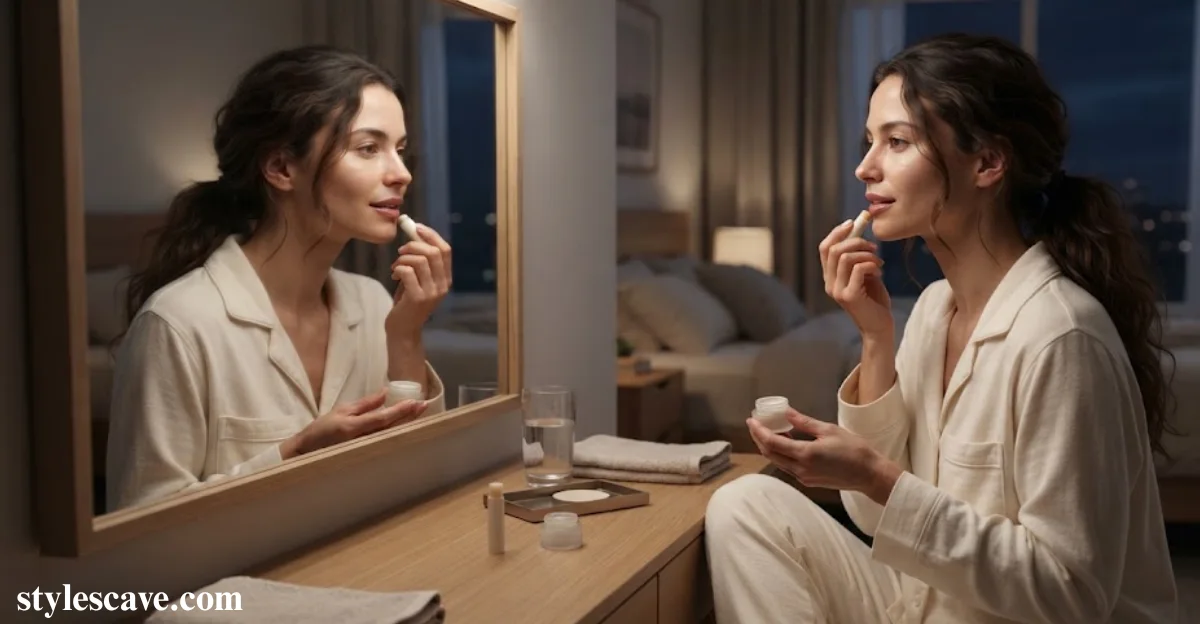
The skin around your eyes and lips is more delicate than many other areas of the face, so it deserves a little extra attention in your nighttime routine. Repeated facial movement, environmental exposure, and natural moisture loss can make these areas look dry or tired over time.
A simple overnight routine can help keep them comfortable and hydrated. You don’t need a shelf full of specialized products; a gentle eye treatment and nourishing lip product can be enough to give these delicate areas some extra care.
Why these areas age faster
The skin around the eyes and lips is relatively thin and experiences constant movement throughout the day. Blinking, talking, eating, and facial expressions create thousands of small movements that can gradually contribute to visible lines.
These areas also have fewer oil glands than some other parts of the face, which means they can lose moisture more easily. Environmental exposure combined with dryness can make crow’s feet, lip lines, and tired-looking skin more noticeable.
Best overnight treatments
- Look for an eye product containing ingredients such as peptides, caffeine, or hyaluronic acid when your main concerns are dryness, puffiness, or a tired appearance. Choose a formula specifically made for the delicate eye area.
- A moisturizing lip mask can help replenish comfort while you sleep. Ingredients such as vitamin E, nourishing oils or other barrier-supporting ingredients can help reduce the dry, tight feeling that often appears overnight.
- Apply eye cream gently rather than rubbing it into the skin. Using your ring finger with light pressure around the orbital bone can help distribute the product without unnecessary tugging.
- Don’t apply excessive amounts just because the skin feels dry. A small quantity is usually enough, and using too much product can increase the chance of it transferring onto your pillow.
- Make lip and eye care part of your regular bedtime ritual instead of waiting until the areas become noticeably dry. Consistent, gentle care is easier to maintain than trying to correct dryness at the last minute.
I started paying more attention to my lips and under-eye area after noticing how quickly they showed signs of tiredness. Using a small amount of moisturizer around my eyes and a nourishing lip treatment before bed made the routine feel simple rather than complicated. The biggest difference was waking up with these areas feeling more comfortable and less dry.
Secret 14: Manage stress before bedtime

Stress doesn’t always stay in your mind; it can also affect how easily you settle down for the night. When your evening is filled with deadlines, worrying thoughts, or constant notifications, it becomes harder to create the calm environment your body needs for quality sleep.
A few minutes of intentional stress management can make bedtime feel less rushed. Simple habits such as deep breathing, putting your phone away, writing down tomorrow’s worries, or taking a warm bath can help create a clearer transition between daytime activity and rest.
Cortisol’s effect on skin
- Cortisol is a hormone involved in the body’s stress response, and prolonged stress can influence several processes in the skin. This may contribute to changes in oil production and make some people’s skin more reactive.
- When stress is consistently high, some people may notice more oiliness, clogged pores, or occasional breakouts. Stress isn’t the only cause of these concerns, but it can be one factor affecting the skin.
- Ongoing stress can also influence processes related to collagen and elastin, which are important for maintaining the skin’s structure and elasticity. Managing stress is therefore useful for overall wellness as well as a beauty routine.
- People with sensitive or reactive skin may notice that stressful periods coincide with increased irritation or flare-ups. Conditions such as eczema, psoriasis and rosacea can have many triggers, with stress being one possible contributor.
- You don’t need to eliminate stress completely to support healthier habits. Creating a calmer period before bed can help reduce evening tension and give your body a better opportunity to settle into sleep.
Simple stress-reducing habits
- Spend around 10 minutes doing slow breathing before bed. Gradually extending your exhale can encourage a calmer state and help shift your attention away from busy thoughts.
- Create a digital sunset by powering down unnecessary devices before bedtime. Even a shorter screen-free period can give your mind a break from messages, social media, and work-related stimulation.
- Try a simple guided meditation or write down a few positive moments from your day. A gratitude journal can give your attention somewhere constructive to go instead of repeatedly returning to stressful thoughts.
- A warm bath or shower can become a relaxing part of your nighttime routine. If you enjoy fragrance, a subtle lavender scent may make the experience feel more calming, provided it doesn’t irritate you.
- If worries keep returning when you’re trying to sleep, write them down in a notebook before getting into bed. Treat the page like a temporary thought parking lot, giving yourself permission to deal with those concerns the next day.
I found that trying to solve every problem right before bed only made it harder to relax. Writing down the things I needed to handle the next day helped clear some mental space before sleeping. Adding a few minutes of slow breathing afterward made my nighttime routine feel much calmer and more intentional.
Conclusion
Beauty sleep is not just about getting enough rest; it is also about giving your skin the right conditions to recover overnight. Small habits such as cleansing properly, keeping your routine simple, and maintaining a comfortable sleep environment can make a noticeable difference over time. The key is consistency rather than following an overly complicated nighttime routine. Choose the habits that fit your lifestyle and make them part of your regular bedtime ritual. With patience and proper care, your nights can become an important part of waking up with skin that looks fresh, calm and refreshed.
FAQs
How many hours of sleep are best for healthy-looking skin?
Most adults benefit from around 7–9 hours of sleep each night. Consistent, quality sleep gives the body and skin more time for normal overnight recovery processes.
What should I do before bed for better skin?
Start with a gentle cleanse to remove makeup, sunscreen, sweat, and daily buildup. Follow with skincare products suited to your skin type and keep your routine consistent rather than using too many products.
Does sleeping on your side affect your skin?
Sleeping with your face pressed against a pillow can contribute to temporary sleep lines and friction. Changing positions when comfortable and keeping your pillowcase clean can help reduce unnecessary irritation.
Is it important to moisturize before sleeping?
Moisturizing at night can help support the skin barrier and reduce moisture loss while you sleep. Choose a moisturizer based on your skin type and how dry or oily your skin tends to be.
Can poor sleep make your skin look tired?
Yes. Insufficient or disrupted sleep can leave the skin looking dull, tired, or less refreshed. Maintaining a regular sleep schedule and prioritizing quality rest can support a healthier overall appearance.






- Be Respectful
- Stay Relevant
- Stay Positive
- True Feedback
- Encourage Discussion
- Avoid Spamming
- No Fake News
- Don't Copy-Paste
- No Personal Attacks
- Be Respectful
- Stay Relevant
- Stay Positive
- True Feedback
- Encourage Discussion
- Avoid Spamming
- No Fake News
- Don't Copy-Paste
- No Personal Attacks
