Perfect Face Skin Care Routine: Dermatologist’s Guide
Updated: December 4, 2025
105
Achieving perfect skin starts with a routine that dermatologists recommend for lasting health and confidence. By cleansing, moisturizing and applying broad-spectrum sunscreen in the right sequence, you can transform your skincare into a regimen that works day and night. Start following this guide today and maximize your results with products tailored to your face and needs.
Table of Contents
Understanding Your Skin: The First Step to a Perfect Routine

Understanding your skin type is essential for building a routine that truly works and delivers lasting results. Identifying whether your skin is oily, dry or combination helps in selecting the right products and care methods. Take a moment to observe your skin’s needs and start tailoring your regimen today.

How to identify your skin type
Identifying your skin type is a primary step recommended by American Dermatology experts, as it recognizes the five main skin types: normal, dry, oily, combination and sensitive. Many people misdiagnose themselves or follow ineffective care routines, so understanding your face’s needs is crucial for maintaining skin health.
A simple test is to wash your face with a gentle cleanser, wait 30 minutes, then observe how your skin looks and feels after applying products. Pat lightly and notice the areas that are shiny, tight or comfortable.
- Likely oily: face and skin appear shiny all over.
- Probably dry: skin feels tight and flaky, looks dry.
- Normal/combination: cheeks feel normal, T-zone (chin, nose, forehead) may be oily, rest dry.
- Normal: dryness or oiliness minimal, skin feels comfortable.
- Sensitive: redness, burning, or stinging, skin reacts frequently to products.
Using the blotting method helps to determine oil levels: press a blotting paper on face areas and check the amount of oil collected. This light test helps identify your skin type accurately.
From my experience, I’ve noticed that people often think they have oily skin, but a simple blotting test reveals the real texture. Watching someone realize their T-zone is the only oily part was a game-changer for their routine. Many start adjusting products after just a few observations and see quick improvements.
Why your skin type matters in product selection
Your skin type is primarily based on the sebum or natural oil your skin produces, a key characteristic that determines which products will help or harm your face. Using the wrong products can worsen skin conditions, as rich creams may overdry dry skin or trigger breakouts on oily complexions, while oil-free products help balance oily skin but may leave dry skin parched and irritated.
Although skin type seems fixed, factors like aging, humidity, stress, and hormonal changes can influence skin type over time, shifting it from combination to drier or more aged, requiring careful adjustments in skincare steps to maintain optimal results.
From my experience, I’ve seen individuals switch products after noticing seasonal changes in their skin. A friend’s routine improved dramatically once they adapted to humidity, preventing both dryness and excess oil. Observing these subtle shifts makes a huge difference in maintaining healthy skin.
Common skin concerns and what they mean
Understanding your skin type is key to customize a skin care routine in the right order and effectively dealing with common skin concerns you may have encountered.
Acne and Blemishes occur when excess oil production affects your skin type and overall skin health, a widespread issue that statistics show impacts many Americans over time.
Eczema (Atopic Dermatitis) presents as dry, itchy, and uncomfortable skin with scaly patches, caused by a weakened skin barrier, requiring attention, hydration, and gentle ingredients.
Rosacea is a condition where reddened skin and pimples build on the face, benefiting from routines that include calming and anti-inflammatory ingredients.
Hyperpigmentation happens due to overproduction of melanin, influenced by aging, sun exposure, and hormonal changes, resulting in dark spots.
Sensitivity involves a skin type that is reactive to skin stimuli, requiring patch testing of products for sensitive skin.
From my experience, I’ve observed that people often overlook subtle signs of sensitivity or mild pigmentation. Watching someone adjust their routine based on these observations led to visible improvements in just a few weeks. Small changes in order and product selection make a noticeable difference.
Morning Skin Care Routine: Start Your Day Right
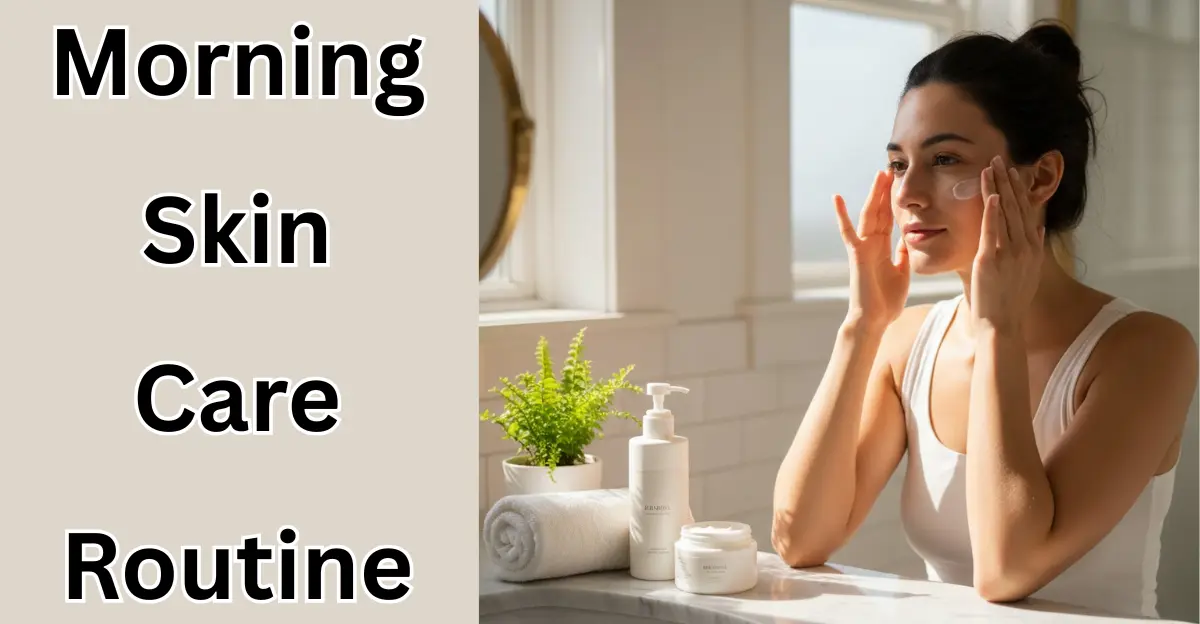
Starting your morning is a fresh opportunity to give proper care to your skin through a consistent routine that keeps you looking good while protecting your skin from daily environmental challenges. Following essential steps at the start of the day the right way ensures long-term results, as many have discovered when addressing the demands each face presents. Moreover, eating natural fruits in the morning play an important role in skin whitening.
From my experience, I’ve noticed that people who stick to a simple morning routine see their skin stay hydrated and vibrant all day. Observing others, even small habits like proper sunscreen application, make a huge difference. A friend once mentioned how consistent morning care changed their skin’s texture noticeably within weeks.
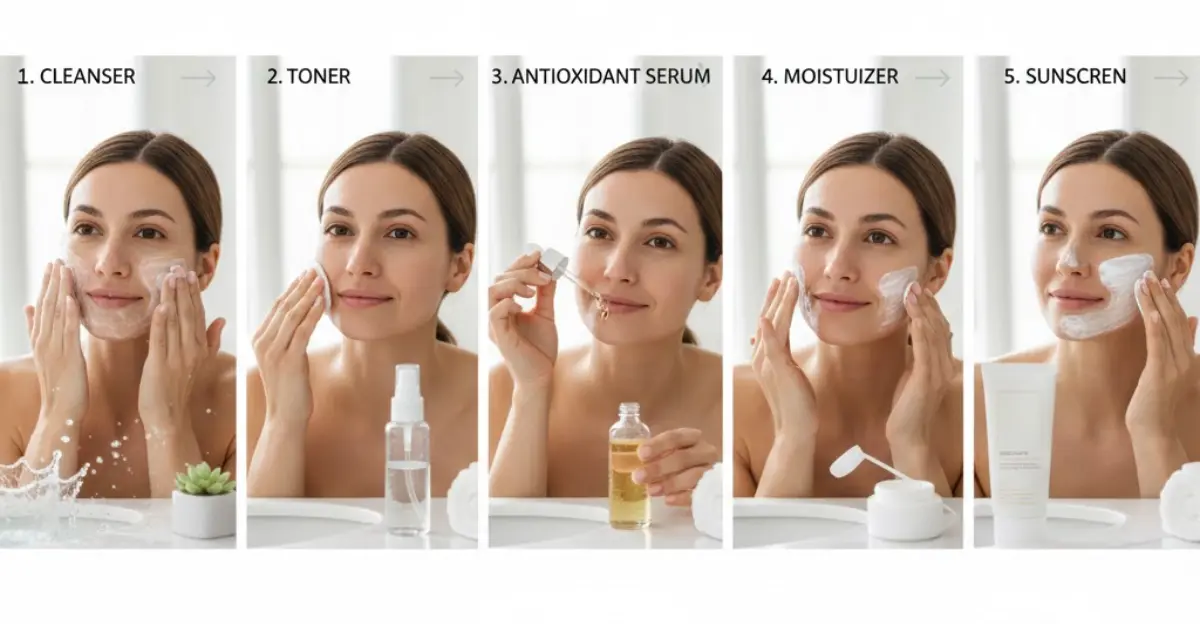
1. Cleanser: Refresh your skin
Using a cleanser to wash your face in the morning automatically removes impurities, a step many have discovered is surprisingly in its effectiveness. Dermatologists suggest cleansing even for optional dry or sensitive skin to eliminate overnight sweat, excess oil, bacteria, and residue from nighttime skincare products, including retinol or exfoliating ingredients.
Different skin types recommend a gentle, non-foaming cleanser in the morning, as splashing water alone can be sufficient. The key is listening to your skin’s needs and following basic rules for optimal results.
From my experience, I’ve seen that people with sensitive skin often skip morning cleansing, but once they started using a gentle cleanser, their skin felt fresher and less irritated. Observing friends adjust to non-foaming options, their dryness was reduced significantly. Simple changes in this step create a noticeable difference in overall skin clarity.
2. Toner or mist: Optional but helpful
Toners have evolved from alcohol-heavy formulas in the past to gentle options that balance pH levels, remove residual impurities, and prepare skin for products that follow. A hydrating mist or toner used post-cleanse can refresh the skin, inspired by French women’s effortless beauty routines, often featuring thermal or floral water to maintain the skin’s natural protective barrier while preparing for the day.
Apply toner on damp skin after cleansing using cotton pads to absorb the product, or patting it in with clean hands, a simple trick many have learned works well for sensitive skin.
From my experience, people who incorporated a light mist noticed their skin felt hydrated and calm throughout the morning. Watching someone switch to gentle toners, their redness and tightness are significantly reduced. This step may seem optional but it noticeably improves skin comfort.
3. Antioxidant serum: Your skin’s daily shield
An antioxidant serum serves as a skin’s daily shield, a step many consider optional but essential to trust for its role in supporting the defense system against environmental damage caused by free radicals, pollution, UV exposure and premature aging. Applying it consistently helps protect your skin from daily aggressors.
Vitamin C is a morning must-have, as studies suggest that minutes spent in the unprotected sun can deplete the skin’s natural vitamin C levels. A well-formulated serum protects the skin and improves the appearance of fine lines and discoloration, leaving the complexion brighter and healthier.
A proper antioxidant serum comes after cleansing and toning but before moisturizer, often combining serums with L-ascorbic acid, pure vitamin C, vitamin E and ferulic acid for comprehensive protection suitable for all skin types.
From my experience, I’ve seen friends notice that adding a vitamin C serum in the morning routine reduced dullness and made their skin look more even over a few weeks. Observing others, combining it with gentle toners and moisturizers significantly improved overall radiance.
4. Moisturizer: Lock in hydration
Using a moisturizer is essential even for oily skin, as skipping it can reduce hydration and cause the skin to produce more oil. Applying the right moisturizer allows the skin to feel nourished without sitting on the skin’s surface or interfering with absorbing other products.
Your skin type determines the ideal formula, with gel-based options for oily skin and richer creams for drier complexions. Lightweight, oil-free formulations work well in the morning, while heavier creams are better suited for nighttime.
Apply moisturizer on damp skin to improve absorption, as it traps water and prevents evaporation. Use gentle, upward strokes on the cheeks, moving outward for even coverage and effective hydration.
From my experience, I’ve noticed people with oily skin often skip moisturizer, but once they started using a lightweight formula, their oil production balanced out. Observing friends applying it on damp skin, the hydration lasted longer and their skin felt smooth all day. Simple techniques like upward strokes make a visible difference.
5. Sunscreen: The non-negotiable step
Applying sunscreen is a step you should never skip, as consistent sun protection preserves youthful skin. Studies show that using broad-spectrum sunscreen daily throughout the year leads to significant improvement in appearance and prevents premature aging.
Even indoors, sunscreen is essential, as windows allow harmful rays to reach the skin. Experts recommend broad-spectrum SPF 30 or higher, ensuring every shot of glass exposure is covered on both face and body.
For clients who spend time outdoors, a two-in-one solution like a daily moisturizer with built-in SPF is ideal, but it’s important to reapply every few hours for continuous protection.
From my experience, people often underestimate indoor sun exposure, yet those who applied SPF even behind windows saw less redness and sun damage over time. Observing friends use built-in SPF moisturizers and reapply during outdoor activities kept their skin looking smooth and protected. Small, consistent steps here make a major difference.
Night Skin Care Routine: Repair and Rejuvenate

A night skin care routine focuses on repair and rejuvenate, giving your skin the rest it needs while working overtime to allow cells to regenerate and repair damage from the day. Following an evening routine is crucial for maintaining healthy skin, as proper PM steps transform your complexion overnight and support long-term radiance.
From my experience, I’ve noticed that people who commit to a consistent nighttime routine wake up with visibly smoother and calmer skin. Watching friends incorporate gentle products at night, their complexion improved significantly within weeks. Overnight care truly shows its benefits when followed consistently.
1. Makeup remover or oil cleanser
Removing makeup at the end of a long day is a proper step in your routine, as using a remover or oil cleanser ensures that regular cleanser can effectively remove even waterproof makeup and sunscreen, double cleansing to prevent clogged pores and irritation.
Oil-based cleansers are ideal as a first step for breaking down stubborn makeup or SPF without stripping the skin, leaving it clean and nourished.
Micellar water like Bioderma’s Sensibio effortlessly removes eye makeup while being gentle on delicate skin. Cleansing balms transform from solid to silky oil upon application, making removal smooth and effective.
From my experience, people who switched to oil-based removers noticed less irritation and residue compared to using just a regular cleanser. Observing friends use micellar water on sensitive eyes, makeup came off quickly without redness. This step ensures the skin is fully prepped for the rest of the nighttime routine.
2. Gentle cleanser to reset your skin
After removing makeup, a second cleanse resets the skin, a step many clients often skip, but it is essential to maintain clean and healthy skin.
Choose a cleanser suited to your skin type.
- For dry skin, hydrating non-foaming cleansers work best.
- Oily skin benefits from gentle, foaming formulas that remove excess oil without over-drying.
This second cleanse helps in creating a clean canvas for treatment products, allowing active ingredients to penetrate and work effectively.
From my experience, people who incorporated a second gentle cleanse noticed their skin felt lighter and less congested. Observing friends, using the right cleanser for their skin type dramatically improved the absorption of serums and moisturizers, enhancing overall results.
3. Exfoliation (1–2x a week)
Exfoliation is not a daily necessity for most skin types; 1-2 times weekly is sufficient, as over-exfoliating can damage the skin barrier and cause irritation.
- Physical exfoliants include scrubs or brushes that manually remove dead skin cells, leaving the surface smooth and refreshed.
- Chemical exfoliants use active ingredients like AHAs and BHAs to dissolve the connections between skin cells, promoting gentle renewal.
Chemical exfoliants tend to be gentler and more thorough, delivering better results when applied at night, especially since skin exposed to UV rays during the day may be more sensitive.
From my experience, people who exfoliate once or twice a week notice a visible glow and smoother texture without irritation. Watching others switch to chemical exfoliants at night, their skin responded better with fewer red spots and even tone. Proper timing and method make exfoliation truly effective.
4. Treatment serums: Retinol, acids, or calming ingredients
Night serums act as your skin’s best friend, working while you sleep, complementing morning products that protect the skin. These treatments help repair damage and rejuvenate the complexion, giving long-term benefits when applied consistently.
Retinol is widely recommended for its anti-aging benefits, as it speeds up cell turnover and promotes collagen production during sleep. Regular use helps reduce fine lines and improve texture over time, making skin smoother and more resilient.
When starting retinol, it’s important to begin with a lower concentration and gradually increase frequency as your skin adapts. Experts primarily suggest this approach to minimize irritation while gaining maximum effectiveness.
From my experience, people who gradually introduced retinol noticed fewer breakouts and a smoother texture without irritation. Watching friends start slowly and increase frequency carefully, their skin adapted well and the anti-aging effects became noticeable within weeks. Consistent, gradual use truly makes a difference.
5. Night cream or sleep mask
A night cream or sleep mask is an essential part of your evening routine, designed to lock in treatments and prevent overnight moisture loss. Compared to creams used during the day, these thicker formulas provide intensive hydration while you sleep, ensuring skin stays nourished and rejuvenated.
Using a sleep mask 1-2 times weekly or as part of your regular face care, it works overnight, deeply penetrating the skin with active ingredients for maximum effect.
These products are excellent for addressing specific concerns such as dehydration and dullness, leaving the complexion soft, refreshed and radiant by morning.
From my experience, people who incorporated a weekly sleep mask saw their skin feel plumper and more hydrated compared to just using a night cream. Observing friends, the improvement in dullness and texture was remarkable, making this step a favorite in nighttime routines.
The Right Order: How to Layer Your Products Effectively

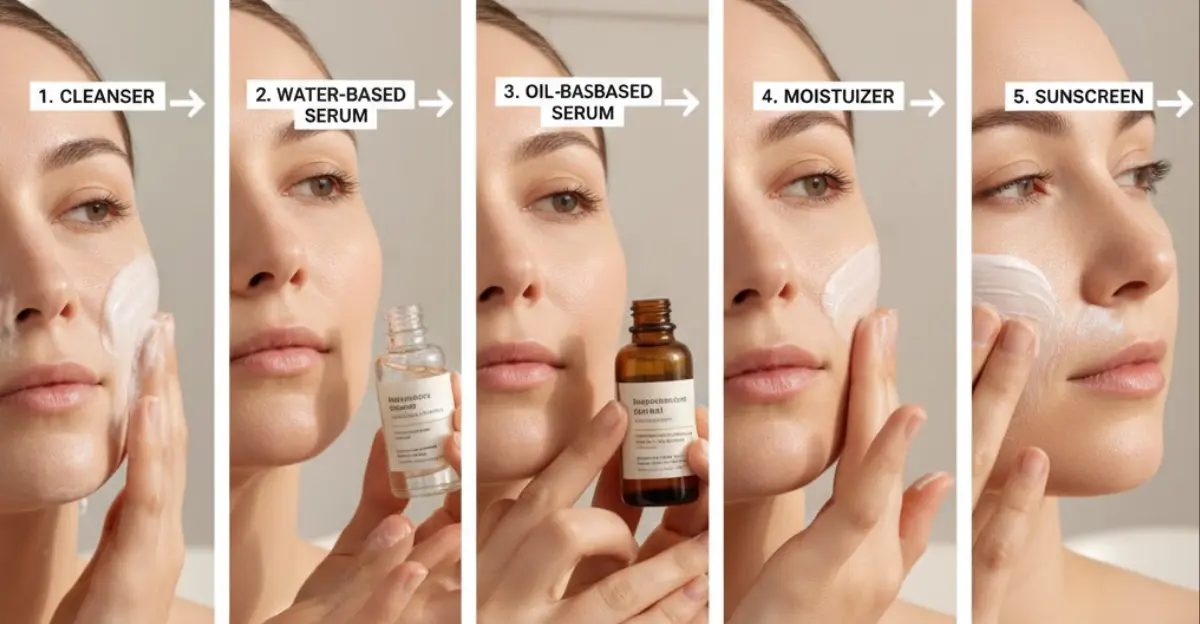
Professional guidance recommends a flat approach to lay out a complete skincare routine, ensuring that the five connected products, from cleanser to sunscreen, create a neutral background for all other treatments.
Even the most expensive products may not work if makeup or other product layers interfere. Many struggle with effectiveness, but using and applying each item in the proper skincare layering sequence is one of the key secrets to maximizing results.
From my experience, I’ve seen clients achieve better results when they follow a structured layering order rather than applying products randomly. Observing friends, proper layering improved absorption and reduced pilling, making their routine far more effective.
Why product order matters
The skin’s primary job is to keep unwanted elements out, making product order crucial. When layered incorrectly, your skin cannot fully absorb the active ingredients it needs, reducing the effectiveness of your routine.
Applying a heavy cream before a lightweight serum can block the barrier and prevent actives from penetrating, limiting dramatic improvements and the potential of existing products.
Even luxury serums fail to deliver optimal results without proper layering techniques. Following the right order can leave skin transformed in just a few weeks, enhancing both appearance and health.
From my experience, people who switched to the correct layering saw faster results and better absorption of active ingredients. Watching friends adjust the order, even high-end serums performed noticeably better, making routines more efficient.
General rule: thinnest to thickest
The foundation of effective layering is a primary principle: always apply products from the thinnest to the thickest. This ensures each product’s consistency can penetrate properly without interference from heavier formulations.
Water-based products should be applied first, followed by anhydrous or water-free formulations such as oils and creams, allowing every layer to absorb fully and work efficiently.
To visualize, think of dressing for winter: a thick sweater goes over a thin t-shirt. Similarly, skincare needs a logical layering that follows this simple principle for maximum benefit.
From my experience, clients who follow the thinnest-to-thickest approach notice better absorption and enhanced effects of active ingredients. Observing friends layer water-based products first, their creams and oils no longer feel heavy or leave residue, making skin feel balanced and hydrated.
How to layer serums, oils and creams
When using serums, always prioritize addressing your primary skin concerns. Apply water-based serums first, followed by oil-based formulas such as vitamin C serum or hyaluronic acid, allowing each to absorb fully before adding the next layer.
Facial oils act as a moisturizer and occlusive, strengthening the barrier and locking in the seal of goodness from previous skincare steps while protecting against external pollutants.
Moisturizers should come second-to-last in your routine, with sunscreen as the final step during daytime, helping to trap active ingredients in the skin while providing protection throughout the day.
From my experience, applying serums first and oils afterward prevents heaviness and enhances hydration. Watching friends finish with sunscreen, their skin retained the benefits of serums while staying protected, demonstrating how proper layering improves overall results.
What to avoid mixing
Be mindful of your skincare combinations and take steps to protect your skin by learning which ingredients work well together. Start adjusting your routine today for safer and more effective results.
- Retinol, AHAs, and BHAs should not be used together, as excessive use can cause irritation.
- Vitamin C and niacinamide reduce each other’s effectiveness when combined.
- Benzoyl peroxide and retinol or BP can oxidize retinol, rendering it ineffective.
Highly potent ingredients in the spotlight can irritate the skin when combined with potentially irritating ingredients.
Keep skincare layering simple and gradually incorporate additional products as your skin adjusts, ensuring an effective routine while protecting skin health.
From my experience, clients who avoided conflicting ingredients noticed less redness and better results from their active treatments. Watching others gradually introduce new products helped their skin adjust without irritation, making routines safer and more effective.
Customizing Your Routine for Your Skin Type
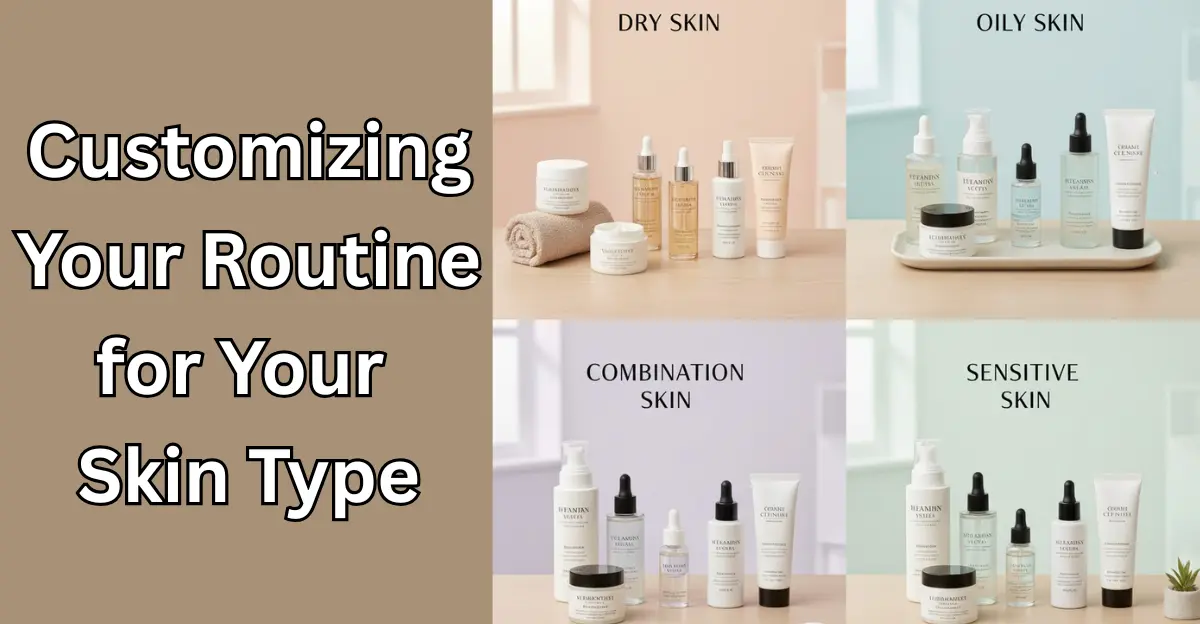
When organizing products, flat surfaces are ideal to lay out your four essential items, including oils and floral treatments. Labels can be paired with your skin type using visual indicators like color-coordinated or pastel backgrounds to make daily routines simple and intuitive.
Every unique skin requires a personalized approach, and customizing your facial skin care routine to match your specific skin type can make a difference in achieving healthy, radiant skin over time.
From my experience, clients who tailored their routine to their specific skin type saw faster results and fewer adverse reactions. Observing friends adapt products according to their unique needs, their skin became more balanced and glowing, proving that customization is key to effective care.
Dry skin: Focus on hydration and barrier repair
For dry skin, prioritizing hydration and barrier repair is essential. Lack of moisture can make skin appear dull, rough and flaky, while visible fine lines develop. Using ingredients like hyaluronic acid, ceramides, and glycerin helps boost moisture and improve skin texture while strengthening the moisture barrier.
Using gentle, fragrance-free cleansers prevents stripping the skin during cleansing. Applying a moisturizer within five minutes of damp skin helps lock in moisture, a simple tip often shared during consultations.
Rich, occlusive moisturizers containing petrolatum reinforce the physical barrier, seal hydration, and maintain skin softness throughout the day and night.
From my experience, clients with dry skin who followed this method noticed immediate softness and reduced flakiness. Observing friends use occlusive creams over damp skin, their hydration lasted all day and their skin appeared healthier and smoother over time.
Oily skin: Balance oil without stripping
Managing oily skin involves maintaining hydration while controlling excess sebum production. Over-cleansing can lead to over-drying, causing the skin to produce more oil in response, so balance is key to healthy skin.
A proper routine for oily skin keeps it hydrated, comfortable, and balanced. Foaming cleansers with gentle formulas help remove excess oil while protecting the barrier, preventing irritation and maintaining skin health.
Use a lightweight, oil-free moisturizer enriched with ceramides, niacinamide, and hyaluronic acid to provide hydration without heaviness, ensuring skin feels fresh and smooth all day.
From my experience, people with oily skin often fear moisturizing, but those who use lightweight formulas notice reduced shine and fewer breakouts. Observing friends incorporate ceramides and niacinamide, their skin stayed balanced and less reactive to daily environmental stressors.d
Combination skin: Target different zones
Managing combination skin can be a challenge because it includes both oily and dry areas. An effective cleansing and hydration routine is necessary for caring for each skin type without over-drying or leaving areas greasy.
For combination-skinned clients, using a gentle cleanser that balances the skin without over-stripping allows each area to benefit from different products. Addressing facial zones separately ensures that the routine works effectively across the whole face.
Applying a lightweight, gel-based moisturizer on the T-zone and a richer formula on the cheeks provides targeted hydration and prevents the oily areas from becoming shiny while nourishing the drier areas adequately.
From my experience, people with combination skin saw less imbalance when they tailored products to each zone. Observing friends, separating moisturizers for the T-zone and cheeks improved overall texture and made the skin feel evenly hydrated without heaviness.
Sensitive skin: Keep it simple and soothing
For sensitive skin, it is important to emphasize simplicity while maintaining effective care. Gentle cleansing, moisturizing, and applying sunscreen using fragrance-free and hypoallergenic products helps minimize irritation and reduce potential risks.
Ingredients like colloidal oatmeal, niacinamide and aloe vera help soothe irritation while supporting the skin barrier. For this skin type, even minor dehydration can trigger increased oil production as compensation, making careful selection essential.
From my experience, people with sensitive skin who simplified their routine using calming ingredients noticed reduced redness and fewer breakouts. Observing friends, those who avoided harsh products and focused on soothing formulas had more balanced, comfortable skin over time.
Conclusion:
Maintaining a perfect face skin care routine is all about understanding your skin and following a consistent, personalized approach. Choosing the right products, layering them correctly and addressing your skin type ensures long-lasting hydration, protection and rejuvenation. Incorporating gentle cleansers, targeted serums, moisturizers and sunscreen helps prevent damage while enhancing natural radiance. With a thoughtful routine, even small steps yield noticeable improvements, leaving your skin healthy, balanced and glowing.
FAQs
What is the perfect skin care routine?
The perfect skin care routine focuses on cleansing, hydrating, and protecting your skin while addressing your unique skin type and concerns. It includes gentle cleansers, targeted serums, nourishing moisturizers and sunscreen to maintain balance, prevent damage and promote a healthy and radiant complexion every day.
What are the 7 steps of skin care?
The seven essential steps of skin care include cleansing, exfoliating, toning, applying serums, moisturizing, treating specific concerns and sun protection. Following these in the right order helps the skin absorb active ingredients effectively, repair damage and maintain long-lasting hydration and glow.
How to get 100% clear skin?
Achieving clear skin requires a consistent routine that includes proper cleansing, exfoliation, targeted treatments, hydration, and sun protection. Avoiding harsh products, using non-comedogenic formulas and addressing individual skin concerns help reduce breakouts and improve texture, resulting in a naturally smooth and radiant complexion.
Please Write Your Comments